The Identity Era: Why Startups Don’t Have To Buy Exact Match Keywords Anymore
26 Jun 2026, 06:03 PM4 min readBy DNChase Editorial
Representative image only
The domain name used to function primarily
as a signpost. Keywords explained exactly what was being sold at a particular
address. BestCarInsuranceOnline.com fits this description.
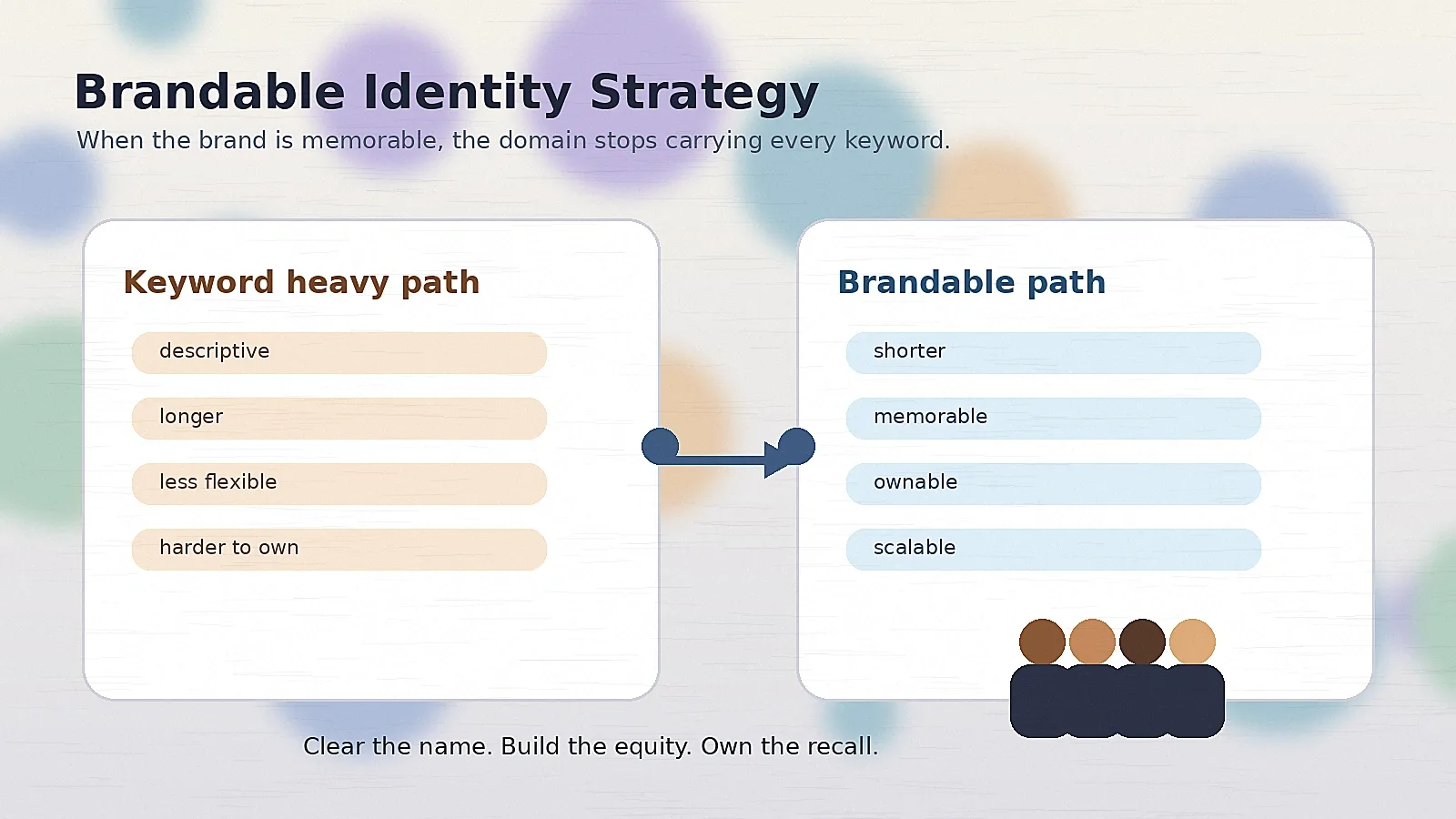
Brandable domains often communicate
something different.
They’re usually pronounceable, shorter,
sometimes even abstract, and capable of spanning multiple products. With an
invented word, companies can own a namespace instead of sharing a description.
“The
more eyeballs the merrier”
Google’s transparency report around ranking
factors for keywords in domain names clarifies that there is no extraordinary
benefit simply because a word appears in the URL.
What’s more, the guidelines continue to point out that Google
automatically penalizes Exact Match Domains in order to limit exactly what was
asked about; ranking bias created by tailoring a domain around a keyword query.
Domain names matter less for search
ranking. That changes how startups should approach naming.
Keyword or phrase domains are still great
for certain services. But they shouldn’t automatically cost thousands of
dollars more on aftermarket platforms. If clever content, well defined brands,
and quality products allow startups to compete with established keywords, then
unknown domains should be able to compete too.
When discussing devaluation in keyword
domains, it’s important to be specific. Memorable one word category domains
like Travel.com will always command a strong audience. Long, inflexible phrase
domains are on the weaker end of the spectrum because their usability is mostly
tied to search advantage.
Stage your brand before you start building equity
Selecting a name that’s already trademarked
by someone else is a great way to limit a brand’s potential. Securing your own
intellectual property early can counteract that risk.
The United States Patent and Trademark Office
offers a comprehensive overview on what makes trademarks registerable. In
short, made up words are called fanciful marks and are generally the strongest
type of trademark.
Term availability doesn’t guarantee global
protection.
A business would still be wise to clear a
name, file within each territory where protection is needed, and have the
details reviewed by an attorney. Consider beginning that process with the WIPO Global Brand Database because it allows
you to search over 80 international trademark portfolios and several national
and regional collections for free.
But a trademark search can also validate
your ability to own a word. If your business concept works without a generic
domain name, there may be less risk that your brand gets diluted by
competitors.
When entrepreneurs ask how to own their
brand with a domain name, they’re often describing the process of creating an
artificially limited brand awareness.
Dominate a keyword category by picking a
unique word. Complete searches to make sure it’s available. Trademark your
brand. Repeat your domain until customers think of you when they think of your
product or service.
Is your Brandable Name Flooding The Marketplace?
Domain aftermarket sales data doesn’t prove
that every .com with four or five letters is valuable.
Liquid inventory from brandable names
exist. In general terms though, the market for abstract names isn’t as
developed as phrases.
Names get listed and delisted constantly.
Some sell every day, while others can sit for years without interest.
Don’t mistake quantity for quality.
Sites like Flippa can provide anecdotal
evidence that certain names sell more than others. SquadHelp (now called Atom)
can quantify how brandables have improved marketplace velocity.
Atom is a marketplace with over 400,000
curated domains ready for purchase. In addition to straightforward buysell
negotiation, they’ve builtlinguistic filters, brand analysis, and trademark
clearing into the process.
Presentation matters when weighing
aftermarket velocity. A startup isn’t just seeing how many abstract names are
available.
Instead, the entrepreneur can evaluate
visual fit, position, and potential product applications alongside domains
being considered. In other words, don’t compare your brandable domain idea to a
list. Compare it to similar brands you would compete with if you were to
launch.
Startup Name IP Strategy
Say it out loud. Make sure someone else can
spell it after hearing it. Do not choose a name that has negative connotations
in large markets.
Run a trademark search. Use WIPO, the USPTO
Trademark Search tool, and any other country where you think you’ll
do business. Nationwide protection is ideal, but outside of the U.S. it
requires resource intensive investigation.
Secure social media handles that match your
domain where possible. Acquire other extensions that make sense. Fewer domains
with the same brand accelerates recognition.
Migration matters too. If this name is a
change for you, take time to migrate properly. Google has helpful documentation on moving your site
which includes directing traffic from your old domain to the new address.
Keyword Domains Are Not Going Away
Startup companies don’t need an exact match
domain name to get found online. That doesn’t mean every new brand should
abandon wordy domains.
An effective brand strategy can still
incorporate keywords. Business names don’t have to be stupid just because your
next startup name doesn’t have to be Wordpressanity.
Pick a brand that fits your product. Build
your equity. Own your brand. The best domain name for your company is the one
that suits its needs both today and tomorrow.