
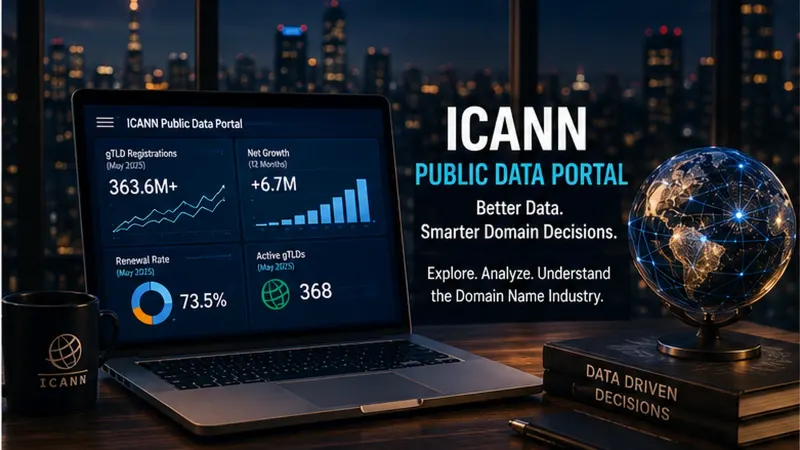
ICANN’s latest public data webpage feels like one of those quiet housekeeping changes that you miss if you blink. But for those interested in domain portfolio risk analysis, insights on the new gTLD market, and domain registry transparency, this update is much bigger than it seems. There is no fresh TLD launch to cover here, nor a blockbuster sale to rewrite. Today’s focus is on access. In the world of domains, access to cleaner public data will influence decisions and transactions.
Domain Registrations at a Glance
On the surface, the news is simple. ICANN has moved publicly-accessible datasets from its Open Data Platform experience to a newly dedicated area on ICANN.org. Users no longer need to log in to ICANN accounts to view available datasets or download the files directly. That helps casual readers, but for domain investors, brand professionals, registries, and researchers it means fewer barriers between a market question and the data that can answer it.
Let’s dig into why that simple change deserves a technical analysis rather than a general news summary. The domain industry is trending toward a market where claims about size, growth, quality, risk, and adoption can all be verified against public metrics.
Better Metrics for Industry Claims
It does not matter if you are buying names or selling corporate safeguards, the domain market has always worked best when individuals can check marketing claims against objective measurements. Domain registrations may be presented in an ICANN annual report, included in a registry status update, summarized during market forecasts, or analyzed in premium tools where you must log in to see the numbers. Questioning those claims was possible, but sometimes felt like guesswork.
The new ICANN public data area starts investors, reporters, researchers, and risk teams with a cleaner baseline. Think of this collection less like a static report and more like a public help desk. Right now, the open data area features Domain Name Marketplace Indicators along with Security Response Waiver Request statistics. ICANN plans to add new datasets over time.
Pulling from this ICANN data page will support better habits. Instead of wondering which new extension is trending based on Twitter posts, ask which categories show steady registration demand. Instead of taking a registry presentation at face value, look for supporting or contradictory market evidence. Noise tends to increase when objective datasets are absent.
Digging Deeper Than Registration Totals
To understand market demand, you often have to look beyond total registrations. As renewal season approaches, some namespaces look stronger than they really are. An extension may skyrocket in size thanks to low priced launches, only to hemorrhage names when registrants fail to renew. Another namespace may grow slower but maintain registrations at a healthier rate. Domain investors often prefer the second example.
Analysts who dig into public gTLD market indicators will start to look for leading signals in adoption, competition, stability, and trust. Do those categories align with size alone? An extension that gains registrations from organic business usage is an entirely different story than a namespace that attracts speculative bulk registrations. A clearance sale may create crowded shelves for one weekend when prices are artificially low. Real value is built when people decide to stay long term, expand, renew, and invite new guests to join the community.
Portfolio Managers Can Gain Investing Edge
Let’s focus on investors for a moment. Tool announcements often promise to replace gut feel with perfect signals. That never happens. By democratizing access to baseline market information, ICANN may actually help investors correct their instincts.
Many buyers and sellers have extensions they “love” based on good experiences or years of natural market exposure. Maybe you sold one quality domain in that namespace and plan to load up. Perhaps a respected registrar announced aggressive promotions for that extension. Domain market instincts matter, but they can also become traps when ignored datasets start moving against your gut feel.
Domain investors can use ICANN stats to help separate an interesting story from a market supported trend. Selling that premium domain name to a business? Show the buyer their desired namespace aligns with measurable, stable market categories – rather than just showing comparable sales. That buyer may care most about the specific name they want – but giving reasons to trust the extension often makes sales easier.
Seen another way, clean datasets should matter to domain investors as 2026 approaches. ICANN announced that the application window for new gTLDs opens 30 April 2026, and domains will become an even bigger part of many brand monitoring discussions. As more strings compete for customer trust, public analysis becomes another filter.
Analyzing Trends Before Speculation Becomes Obvious
Public datasets also help question weaknesses before they become obvious. Deletion rates are just one example. You will not get near-realtime updates via this page – but you can watch declines that outpace launches. Names might flood an extension during a promotional period – only to drop later when registrants realize those addresses were too cheap or unknown to earn real business value. Monitoring public indicators can help identify when registrations were artificially inflated by price, speculation, or one-time events.
That is not to say every clearance rack or discount launch is meaningless. Discount periods create opportunity and can teach people to love new extensions. The issue arises when names start dropping because registrants never found a reason to activate. Tracking public top level domain growth rates matters – but so does understanding the quality of that growth.
Brand Monitoring Teams Can Track Trusted TLDs
Domain investors are not the only teams that should use this tool over time. Brand monitoring professionals often wait for counterfeits to appear before they protect their trademarks. If you know risky registrations are flooding a namespace – whether certain new gTLDs or targeted ccTLDs that appeal to impersonation, spam, or affiliate abuse – you may want to adjust defensive monitoring in advance.
This ICANN data page will not replace trademark watch services, but it could supplement UDRP research by giving teams a better sense of overall market health in each namespace. Does a sudden surge of registrations in unknown namespaces align with real stability metrics? If not, brand teams can consider defensive registrations, closer monitoring, or internal policy updates before abuse happens.
Data is offered in CSV format, so anyone can plug these stats into spreadsheets, business intelligence tools, or internal dashboards. Live API feeds would be nice for future updates, but even monthly checks can improve domain risk intelligence before problems become loud.

Market Comparisons and Industry Pressure Points
Future uses could include regional analysis. Registrations do not grow evenly across the entire domain market. North America often cools while Asia warms up. Internationalized domain names gain popularity in one region while legacy TLDs maintain status in another. Country code extensions often have their own trends that compete with generic extensions. Public metrics makes it easier to study those shifts while avoiding private reports filled with advocacy.
Look for ways that public datasets help you check claims. Investors often ask me for free domain industry market reports. Most of the time, they are asking for free and reusable info that does not come embedded in a sales call.
Tracking Extensions vs Inventory Assessment
Whether you protect brands or build portfolios, consider this strategic checklist:
Bookmark ICANN’s open data page and schedule review time. Quarterly reviews help casual investors. Active portfolios may deserve monthly analysis. The goal is to recognize when your own market expectations fail to match public realities.
Compare your holdings against baseline trends. Are most of your names in extensions that lack stability signals? Maybe it’s time to raise your renewal standards. Do you hold names in strong long term categories? Some extensions may deserve more patience on pricing or better education for prospective buyers.
Use ICANN charts when talking to buyers. If you own names in extensions with public backstops like these, share that during sale conversations. Can’t find the specific extension on these ICANN pages? Highlight that instead. Either way, you help the buyer feel more confident about a decision to trust certain extensions.
Closing Thoughts: Beware the DIY Data Pitch
ICYMI: ICANN’s launch is not a commercial tool. It also is not a literal trading terminal. But by democratizing access to gTLD metrics, ICANN moves the needle toward where mature markets usually trend. More public datasets lead to better questions. Better questions lead to fewer decisions based on fear, assumptions, or hype.
Domain investors can use ICANN updates as part of regular homework assignments. Brand teams should consider ICANN data part of broader risk awareness efforts. Registry operators may soon face greater accountability because piecing together historical datasets becomes less difficult. More datasets mean questionable claims can be tracked before deals are negotiated.
Domains are trending toward a transparency boom. Whether you are buying, selling, protecting, or registering domains in 2026 or beyond you will be expected to understand not just specific names in your portfolios, but also the long-term health of each extension you touch. Not every question can be answered with public datasets. However, by removing login barriers to datasets.ICANN has made it easier to spot the questions that really matter.