
When Infrastructure Meets Domain Identity
NIXI turning another year older isn’t just news to publish on their anniversary. It’s also a chance to evaluate how India’ premier internet infrastructure association is looking beyond internet exchange traffic, to consider .IN market depth, local language domain opportunity, and the Internet Registry for India (IRINN).
On paper, NIXI going from 22 to 23 may not seem like much. NIXI is short for National Internet Exchange of India, and was incorporated on June 19th, 2003. So they’re celebrating slightly more than two decades of running India’ internet exchange system. But digging a little deeper shows that their role is growing beyond internet traffic exchange. It now covers three broad areas of focus:
1. Internet exchange services
2. Registry services for .IN domains
3. Internet number resources (IRINN).
For domain investors or entrepreneurs looking at India,.IN local language domains, and IRINN, this expands their view beyond peering ISPs to market opportunities tied with how Indian users search for, trust, and use websites in the coming years. Especially since this new Internet phase could apply to everything from market expansion plans to exit strategy evaluations.
Setting the Stage For Next Level Internet Traffic In India
It helps to understand NIXI’s foundation purpose. They started out serving a simple, albeit critical function. Indian internet service providers needed to have domestic traffic exchange services so that communications didn’t always route through foreign networks. This improves speed and connectivity when everything stays local, or nearby.
As internet penetration increased, NIXI’s function evolved. They handle internet exchange, .IN registry services, and now have an affiliate IRINN working on internet number resources. IRINN stands for Internet Registry for Internet Names in India. But what does it mean to expand beyond just internet exchange?
Taking a peek at NIXI’s 2026 Roadmap posted on their site shows some clues. Over the next few years, NIXI aims to accommodate 90% of India’ internet traffic locally by the end of 2026. So the larger goal isn’t just new users using data faster. It’s enabling Indian internet users to find local businesses, type web addresses in their regional language, trust .IN domains, and know they aren’t relying solely on international network routes to connect to websites.
This Growth Forecast doesn’t come out of nowhere. Analyst predictions from TRAI state that India’ annual data consumption is expected to increase twenty fold by 2026. A key data infrastructure hub will be the exchange points NIXI supports. Domains factor into this mix by giving brands a place to point local users too.
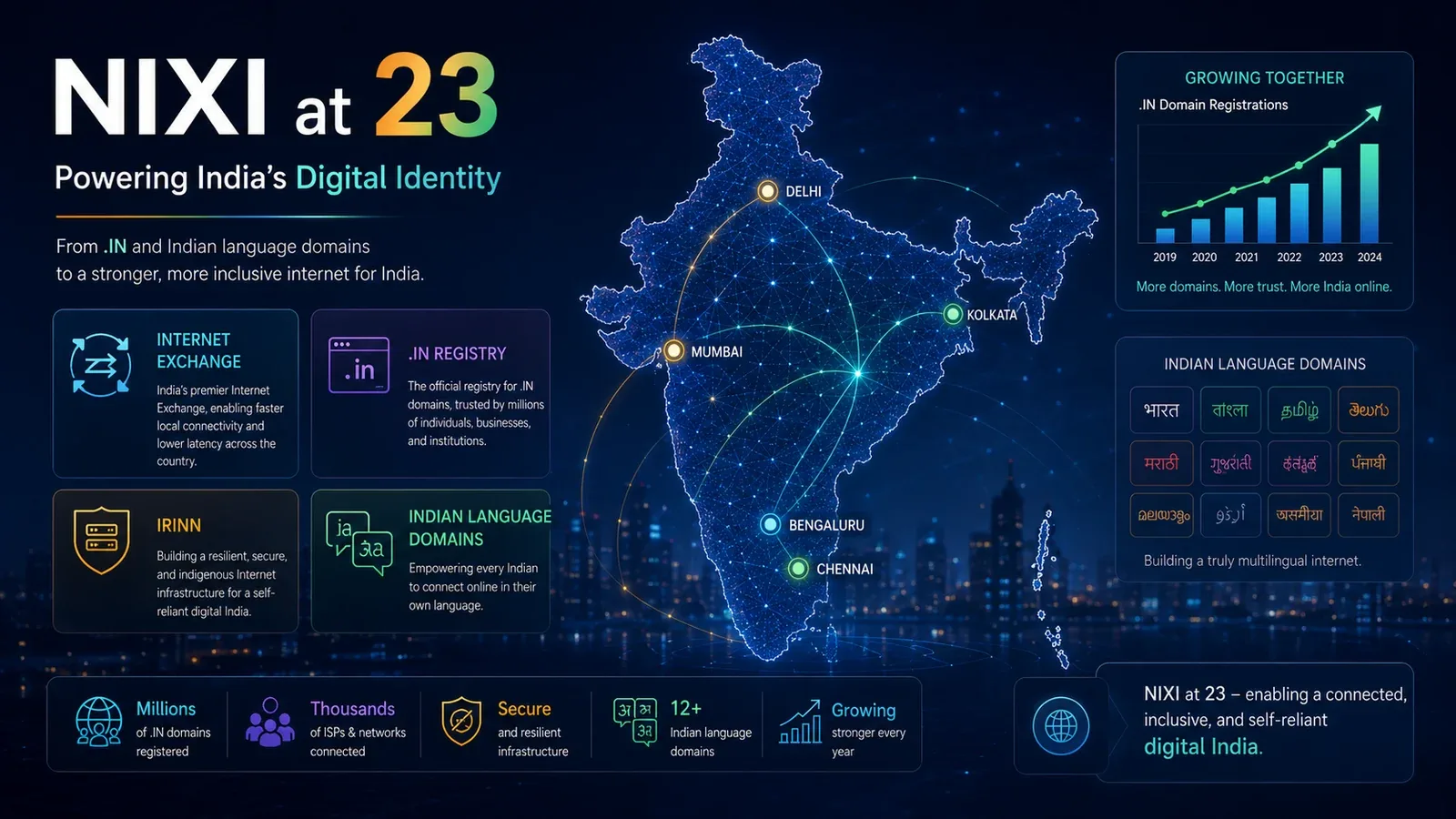 Image for illustration only.
Potential Upside Skewed Towards .IN and Local Domains
Just because .IN has been around since before NIXI was created doesn’t mean every .IN opportunity has been tapped out. Brands looking for natural Indian identity lean towards .IN for the same reason. Short, easy to remember, and well associated with India.
Domainers shouldn’t mistake .IN as trying to replace .com brands either. India has room for both .IN domain growth and .com businesses. The brands who do both will benefit from both exposures. But a well positioned .IN could provide greater trust with local customers versus a .com registration.
For domain investors watching .IN name valuation trends, know that growth isn’t guaranteed across all words. Long frase names don’t automatically become valuable in India just because the population is rising. But short one or two syllable words, popular business terms, generic category terms, financial terms, education keywords, health related terms, ecommerce terms, and other businessable names could rise in value if India’ online marketplace deepens.
Indian Language Domains Could Fill Key Demand Gaps
Possibly the least talked about component of NIXI’ three pillars is their involvement with local language domain names. According to Registry. IN Internationalized Domain Names (IDNs) are domain names represented by characters from local languages. The IN Registry will be registering Indian language domains.
India has hundreds of mother tongues spoken on the subcontinent. If internet services want to reach their next billion users, brandable online identity shouldn’t be limited to English only keywords. But local Indian language domains aren’t a magic deploy and win battle either.
Language sites will requirebrowser support. Login emails will need to work. Payment gateways can’t have issues accepting local scripts. Form inputs, smartphone keyboards, server infrastructure, and support teams must all work with Indian language websites. That’s called Universal Acceptance. When domain names don’t break down at any point of use, they gain value.
Patient Investors Could Find Language Niche Opportunities
If Indian language names depend on wide spread acceptance, that doesn’t mean savvy investors shouldn’t research Indian language keyword lists. It just means strategizing early for local language domains should be more thoughtful. Instead of trying to buy random words in Hindi, Tamil, or Bengali scripts, do some digging.
What keywords are really searched in language apps? How might people sloppily spell certain terms on mobile keyboards? Are there commercial terms businesses use in regional languages that have no English equivalent? What categories work best in each script language? These are the types of questions to consider when researching gold mine opportunities in Indian language domain names.
Large Cities Aren’t The Only Peering Markets Growing in India
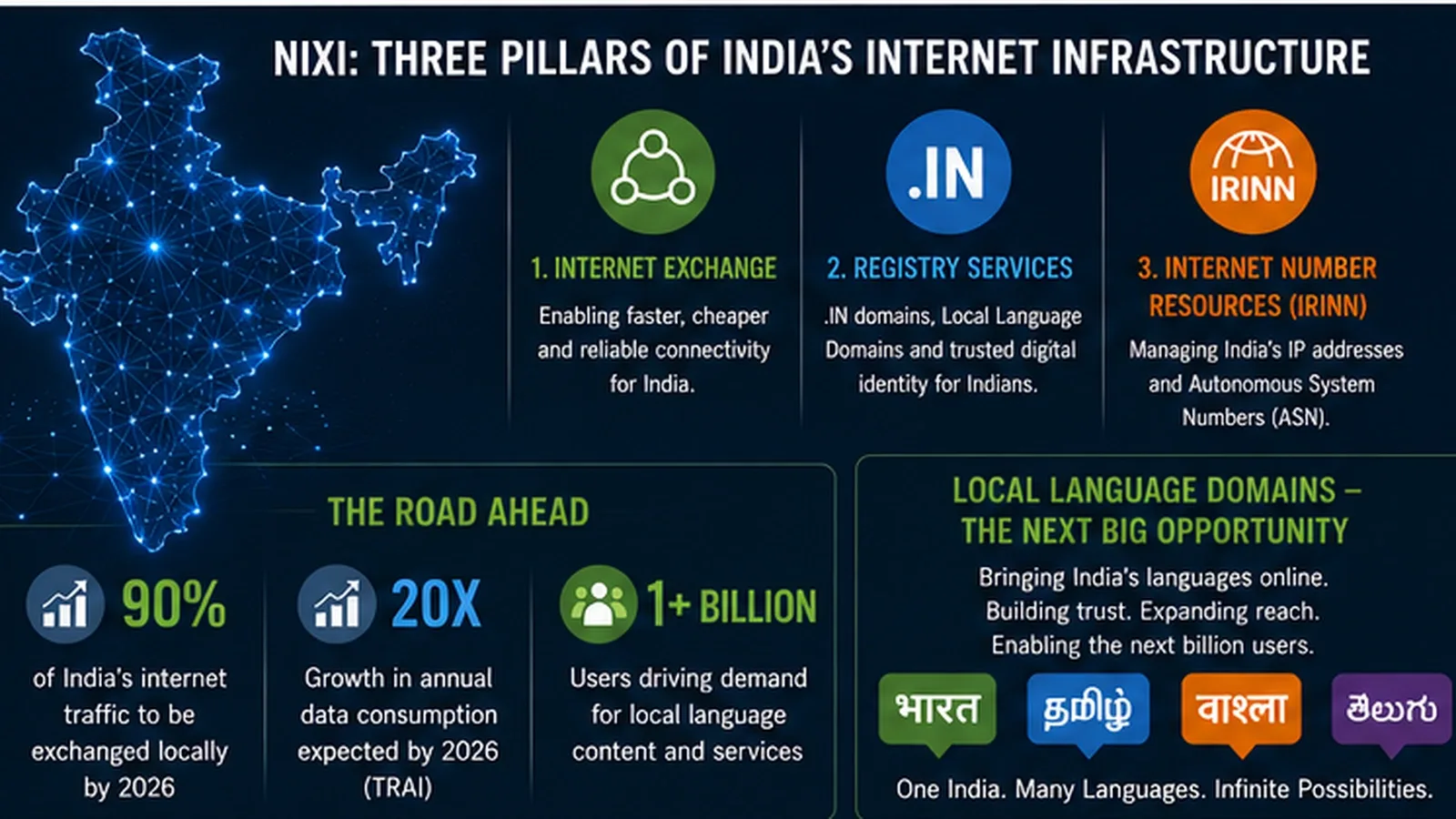 Image for illustration only.
NIXI feels somewhat like a behind the scenes institution. But in reality they support the future of India’ internet economy. Local .IN websites rely on stable exchange points to keep performance fast. Businesses and websites that load faster and more consistently earn more trust from Indian users.
Urban areas won’t be the only internet growth markets fueled by better exchange networks. Expect regional language content to increase, localized small businesses to move online, digital payment flow to rise, and more cloud based services to reach vernacular content creators and non metro businesses. All of these industries will expand domain registration momentum in India.
An Opportunity For Forward Looking Brand Owners Too
Domestic peering growth affects domain investors. But it also has brand owners should consider evaluating their .IN ownership as well as their exposure to Indian language markets. If a company has serious intentions to serve the Indian market over the long term, language nuances matter.
Every brand should own their .IN name if it is available. From there, look into ordering local language variations of their main brand to protect core brand equity from misspellings and confusion. This isn’t about market speculation, but ensuring brand integrity and trust signals are optimized for Indian customers.
Analysis: Why NIXI At 23 Matters To Domainers
NIXI turning 23 may not seem like domain news. But every dollar paid for .IN registry services or every web visitor that benefits from improved peering, INDR infrastructure, or uses an Indian language domain to connect to a local business serves India’ digitization movement at the ground level.
Domain investors looking at India should care about NIXI maturing past year 23 because India has the users, the digital momentum, language diversity, and foundational domain market with .IN to become a large Indian language economy. If layered internet infrastructure supports that shift, then savvy domainers can position themselves within it too.