
Introduction
Google’s recent June 20th spam update isn’t just another search weather event to bitch about for a few days. For domain investors, aged domain builders, affiliate site operators and brokers selling high authority aged domains, June’s spam update cuts directly into one of the most abused assumptions about aftermarket domains: buying an old domain with backlinks and repurposing it into a new money website.
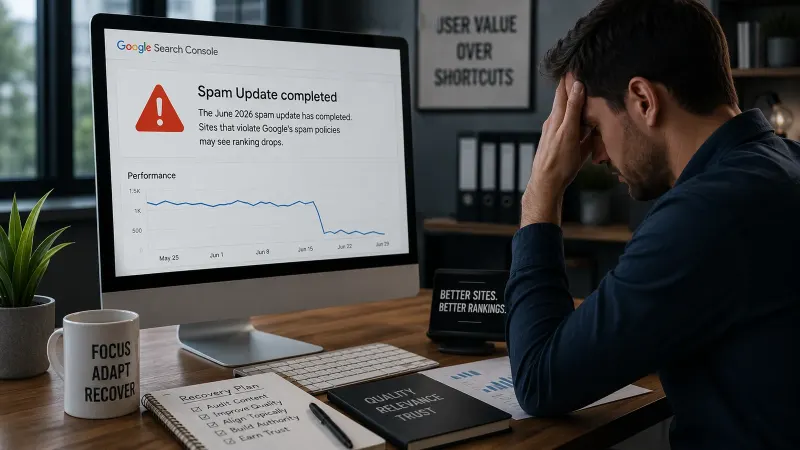
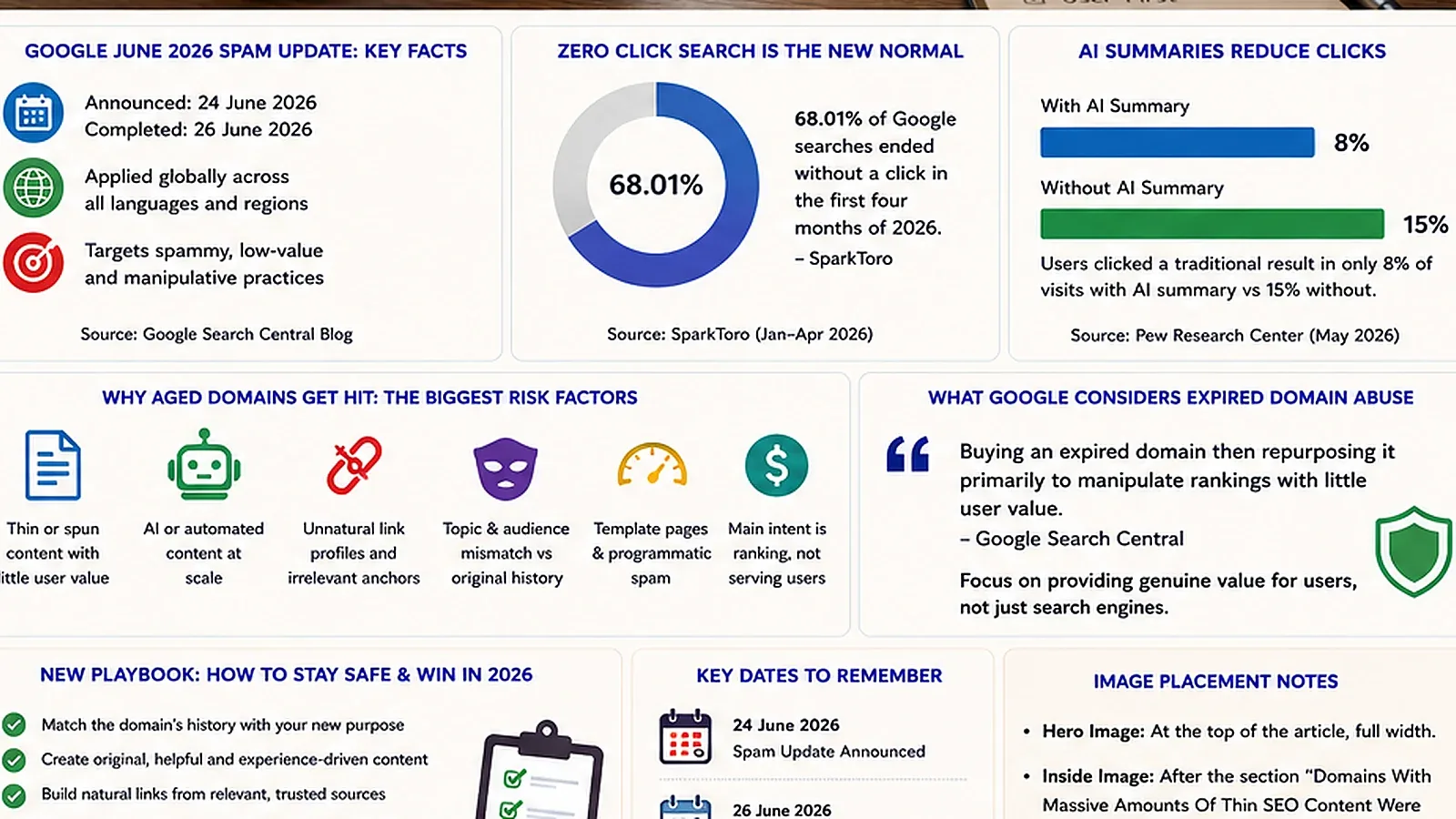
Announced on 24 June, and completed by the 26th, Google called this a normal spam update applied globally and across all languages. That rapid rollout window is important because many owners of sites hit by the update saw ranking changes fast, and the most panicked demographic should be obvious: operators of newly rejiggered aged domains stuffed with artificial or thin commercial content.
Buy Domains. Drive Traffic.
Need traffic from top websites? Join Now
DON’T PANIC: Old Domains Are Not Forever Doomed
This article is not a PSA against buying aged domains. Older domains with history are good. Buying a domain then pretending like your new purpose has absolutely nothing to do with the aged reputation of the domain is bad.
Google says as much in their webmaster help pages with a solid description of expired domain abuse: Buying an expired domain then repurposing it primarily to manipulate rankings with little user value. Note the key words: mainly to manipulate rankings and little or no user value.
Google’s recent June 2026 spam update seems like a really hard “DUH” moment for folks still buying names then blindly throwing up as much low-grade commercial fluff as possible while expecting ancient backlinks to solve all their traffic needs.
Why This Google Update Hurts Domain Investors More Than Most
Old school expired domain purchases were blunt. Find domains with backlinks, buy them cheap at auction or after drop, then rebuild them quickly. Stuff them full of affiliate pages, hire a renter farm to generate locations cities, and then hope the old authority magically pushes your crappy new content up through the rankings.
In some cases the new site had zero actual relationship to the old site. A charity domain became a coupon site. A grade school educational project became an illegal casino leads site. A local mom and pop became a blog full of software reviews for national audiences.
Google help pages also lay out expired domain abuse as the practice of buying expired domains then repurposing them primarily to manipulate rankings. Spot the difference. Google specifically does not throw the manual at normal business purchases, brand renewals, or genuine archived restorations.
Old domains are bought and sold everyday. Period. Investing in aged domains still has value. And high risk aged pages are bad. Full stop.
I wrote this not to scare investors away from domains. I wrote it because this Google June 2026 spam update is hammering domain names repurposed into something totally contrary to what earned those links in the first place.
Domain investors need to see this update as a slap against buying names then throwing up SEO fluff as fast as possible just because some name had good “numbers.” June 2026 seems to be a strong indication those SEO shortcuts are finished.
Domains With Massive Amounts Of Thin SEO Content Were Hit Hardest
The easiest aged domains to spot after any kind of spam update are the ones that scream SEO BS. They go up fast. They have hundreds, if not thousands, of pages. Some are little more than templates stuffed with variables.
A lot of content is spun, scraped product descriptions, or copies and pasted affiliate blocks. AI text generators had a field day on pages hit this time around as well.
Google’s spam policies clearly lay out scaled content abuse as having large amounts of content created primarily for the purpose of manipulating rankings. User benefit be damned. It does not matter if a robot generated the SEO fluff. Nor does it matter if every single page was crafted by paid humans on Facebook gig queues.
Google cares that your content exists primarily to capture search traffic. Period. If your main intent was to serve users, awesome. There is recovery potential. If your main purpose was rankings? June’s update was a preview of what happens when Google eventually punishes that behavior.
That is why auto SEO builders need to be careful. Automated content creation is not automatically evil. Encyclopedic indices, product catalogs, job openings, travel sites, maps, and price comparisons can all offer genuine value. Programmatic generation of those assets is different from buying a premium aged domain then trying to pass thousands of generic affiliate pages off as legitimate bird feeders.
Domain History vs. New Use Problem
Google will not publish their spam detection formulas. Nobody outside of Google should pretend to know exact variables. But here’s the secret sauce behind aged domain problems: History matters. A legitimate review of old against new can quickly compare old topic verses new topic, old audience against new audience, old links vs. new links, old anchor text vs. new anchors, old ownership patterns vs. new owner, old URL structure vs. new design, and finally new content intended to serve users vs. created as SEO bait.
If a domain was a local medical charity for 10 years, then all of sudden poofs back onto the market as an affiliate gambling bonus site…There is a tremendous disconnect between who trusted that domain and why, vs. what you are doing with it now.
If old backlinks are from coast to coast universities mentioning organic health awareness but your new site is pumping out low-grade pet food reviews at rat smash bingo, there is now a pretty obvious disconnect between what made that domain notable ten years ago vs. what you are doing with it now.
Domain Buyers: June 2026 Was A “Wait…WHAT JUST HAPPENED?” Spam Update
When a domain loses over 80 percent of search visibility inside of 72 hours of a spam update, denial is not the first emotion we should tell our clients to feel. Understand what happened. Review every angle.
A drop that large is not seasonal drip. It’s not going to be fixed by swapping meta titles on a few pages. Owners of hammered domains need to dig deeper.
Stop. Take a breath, and then do this:
1.) Login to Google Search Console. What pages are losing impressions? What queries suddenly dropped away? Did crawl stats change overnight? Are old URLs indexing at the same rate as new stuff? Does the loss impact the full domain, or just specific folders?
Domain wide losses indicate different problems than sectional loses.
2.) Review archive.org history on that domain. Do old categories make sense for new content? Do old page titles explain your new purpose? Does new content honor old audiences who trusted your domain once upon a time, or is all new stuff purely there to exploit inherited backlinks?
This is how aged domain SEO recovery starts. Your domain may be stuck in reputation Hell because it was living a double life. Acknowledge it. Fix what you can.
Pricing Expectations For High DA Aged Domains Are Changing
Brokers need to start including more quality data in their research files. Premium domains without topical continuity are going to suffer price adjustments if current owners get smacked by June like we saw.
A detailed history log might include archive screenshots, sample anchor distribution in referring links, known prior ownership history, old content categories, prior redirects, history of spam complaints, known lost pages, and examples of what looks stolen, copied, or completely automated.
“High DA, trust us!” is suddenly going to sound incredibly lazy to informed buyers that understand June’s update.
Domain Due Diligence Checks Recommended Before Buying
A domain buyer should always look at historical archives before buying an expired domain. Don’t trust SEO stats on a landing page or silly sales letters alone. Think like an investigator:
Old brand mentions? Categories? Does that page look like a real active business that served users, or was it a parked, hacked, doorway domain hosting network long ago?
After you review old content, check the referring anchors. Are those links filled with old brand mentions? Old topical references? Links from charity pages? University extensions? If so, ask yourself: Can my intended use for this domain honor that history? Will Google?”
Most folks won’t take that extra step, which is fine. Just know all those companies screaming “June Buyer Beware!” in their popup ads were probably looking at that domain ages ago too.
Then check DNS history where available, prior redirects, prior index status, major known ownership changes, or spam complaints if available. Sold through a spam farm twice? Great. Now the domain is cheap. Asking price be damned.
Domain Brokers Beware: June 2026 Will Mess With Your Glossy Sales Letters
Domain brokers selling expired domain inventory need to clean up how they talk about using older domains. Yes, links still matter. Past reputation still matters. But selling domains only on the merits of potential power scores is lazy.
The problem is well intentioned buyers who buy into that “name seller hype” then get smacked hard by Google for building something completely contrary to what made that domain reputable in the first place.
Domain sales files with aged names should include obvious past topics, archive screenshots showing a clean history, sampling of referring link anchors, known spam history, sketchy redirect chains, recent known ownership transfers, and page examples users would value without search.
Obscure the past and you might make a sale. But word spreads fast in this industry. “Buyer Beware!” messages might not affect your last deal, but they will effect your next 20.
Age Does Matter: When Older Domains Are Safe To Use Again
Good aged domains are still good. Purchasing older domains with a past rooted in legitimate businesses, non profits, common resource sites, or genuine utility is about to get a lot easier.
Buyers will punish brokers that only care about selling aged dirty money flows. Clean quality older domains with honest histories will shine brighter now.
Sites Designed Only To Leverage Past Domain Reputation Got Hit Harder
Google didn’t just go after repurposed domains this month. June 2026 was also about sites misusing past reputation.
Google penalty updates like June harm more than aged domain investors. Sites renting content from bunches of unrelated “trusted hosts” to capture search engine signals should also look at June as a giant red flag waving emoji.
Google’s site reputation abuse policy points to specific examples of where third party content is placed onto an authoritative site primarily for ranking benefits. It’s highly related to what we call expired domain abuse, but with a twist.
Owners of larger respected sites may knowingly or unknowingly allow paid placement of content that leverages “domain reputation.” Both cheated users expecting one kind of brand reputation then getting something completely different.
Site owners: Don’t panic and throw up more garbage links just to game June. If you run content or ads on your site specifically because some random owner said “Hey, use me. I’m popular on Google!” your luck could run out too.
When Good Names Go Bad: Third Party Liability
A good company can get slammed by mistake. You can buy an aged domain unaware of its dark past. Small businesses grow into bad names they thought were safe. SEO agencies can inherit spam residuals left behind by prior domain brokers.
Google systems want to protect user experience, but good businesses can get caught in the purge. Do your due diligence. June is bad news for older domains with awful SEO pasts. Google is nothing but patient if your site eventually cleans up its act.
Manual Actions vs Algorithmic Penalties
If your site was given a manual action by Google, you will see that penalty listed in Google Search Console. Someone at Google manually reviewed the web and decided there was a spam issue based on their guidelines. You have to fix what they say is broken, then ask to be reviewed again.
Simple as that.
If June’s update hit your site via algorithmic penalty, there may be no message. You may never see a single Google page telling you “Hey fix this, then ask us nicely.”
You have to reverse engineer what caused the penalty. Remove spam signals. Improve poor quality content. Then hope Google notices over time.
Software SEO marketers might not like that answer. They can get really greedy hunting that one magical plugin. That “OH SHIT we need to delete this SEO vendor!” moment. Or which batch of copied Craigslist content was the final trigger.
Programmatic SEO does work. I use it on commercial websites. But June was probably a hammer against sites who decided to throw links, spun hacked parkode content, auto generated SEO crap pages at an incredible rate, then expected Google to reward laziness and spam.
Build For Humans, Search Engines Will Follow
Algorithmic or manual, site recovery starts with your new use. Does your site match the old domain purpose closely enough to pass? Do backlinks point to old resources that no longer exist? Where possible restore value equivalent pages.
Too different? You either rebrand to fit that old brand trust, or stop trying to game inherited signals for purposes Google may never fully trust.
Webmasters: 3 Steps To Recovering From Google’s June 2026 Spam Update
Step 1: Fix whatever went wrong. Dump shady affiliate directories. Thin doorway pages. Copied product descriptions. Stolen city/distance spin pages. Automated SEO crap. Stop throwing more links at the problem because your old pages used to rank. Delete bad stuff. Clean up.
Step 2: Rebuild core elements with actual humans doing the writing. Show some real contact details. Offer up original research, useful curated data, product reviews with actual experts behind them. Define clear editorial standards. Populate the site with stuff people would value, even if Google stopped sending traffic tomorrow.
Step 3: Slow down. Don’t buy that aged domain on Monday, then add 1,000 SEO shit pages by Friday. Google knows how fast you built that page, and it looks incredibly suspicious because…it usually is.
Clean Integration Strategy For Newly Purchased Domains
If you’re worried about recovery timelines, start with basic site building blocks. Add a real about us page. Tell Google it’s a new owner if needed. Where possible fix old URLs that still index, but don’t serve value. Don’t slam dump 10,000 SEO spun leads pages because some sniper told you to.
Publish legit content that matches old theme where possible. If your theme doesn’t match, create content that defensibly bridges from the past to present use. The about page helps with this.
As new content goes up, watch Google Search Console like a hawk for the first month. Sudden crawling and indexing shifts, soft 404’s, huge impression loss on old pages, or_Query_AsyncContractions that should be there but aren’t. If Google stops crawling large portions of your site after June, stop publishing new crap until you identify the trigger.
The Bad Lesson June’s Update Should Teach The Domain Industry
Part of the aged domain market was NEVER about brand value, niche traffic type in value, or building a real business. It was about buying old trust, then ripping users off with fake pages until search caught up.
It needed choking out. It leached organic SEO results. Cheap sites hidden behind awesome old URLs still misled users andGoogle’s buying aged domains became dangerous speculation, not investment.
It also tainted good domain owners that cared about history, gave backlinks actual relevance, and built names for a purpose.
June’s update stinks for lazy SEO cowboys. Google thrives on making idiots look stupid. For the rest of us? June just told the market aged domain values are going to prioritize clean brand identities over spam relics from the dot com eviction day sale.
Before You Drop That Next Million Dollar Name…
1.) Review old archives BEFORE you buy that domain name. Auctioneer bragging about ugly DA scores? Backlink screenshots that lie about your dreamed use? Read old content. Hold that domain to the historical past it once knew.
Are you going to honor what made that domain reputable, or completely ignore it?
2.) When in doubt: Check anchor text on referring links. Backlinks do not equal legitimacy. Backlinks are proof why other sites trusted a domain at one time. Treat those anchors like clues. What do they say about past brand? Past business? Past reputation?
Odd URLs? Spammy adult anchors? Foreign anchors? Perfect. You can dump your research RIGHT NOW because amateur hour brokers selling to idiots probably priced that name cheap because “no one would know.”
Mass crypto plugin links? Viagra related redirects? Sketchy looking links from pay for post junk? You get the idea.
3.) New websites should avoid pivoting too wildly from past purpose. If Jim runs BirdiesForever.com, a medical portal should NOT repurpose to BirdiesBet.org overnight. A teacher’s resource site should not morph into NationalCryptoCoupons.shop.
Give some respect to past owners. Sure, you can grab that name and launch your casino affiliate empire immediately. But are Google’s going to reward that effort? June’s update says no.
GoogleJune’ SEO players adapting to June updates from here on out will avoid wild abandonment. Start with human written content for the first 90 days. Publish actual places of operation, logical evolutionary shifts, explanatory site maps, AND pages that would serve real users even if Google slapped your site today.
Yep. This flies in the face of SEO autobuild gurus that claim throwing up ONE MILLION WEBSITES on a presold DA hashtag name will offset June losses. Publish sloth. June hates you.
Finally: June hits came as a bit of a surprise to me as well. A lot of SEO crashes are like watching a train wreck in slow motion. June was that train hitting a brick wall full speed ahead.
Domain recovery, industry improvements, and using aged domains post June is simple. Know what your new site DOES for users. Know what your new name once DID for other users. Bridge the gaps, and both will align in Google’s eyes over time.
Recovery From Google’ June Spam Update 2026
Domain owners: Follow steps 1 through 3. Manual action? Fix, Reconsideration Request, done. Algorithmic issue? Rip off the SEO Band-Aid and start over. Clean content makes recoveries faster.
Domain buyers: Do your homework. June is here. Google will continue to punish shortcuts. Keep buying “name for names sake” and you’re buyer beware TOO.
Domain brokers: Serve clients like they are your brand. Obscure shady pasts and you might keep selling. Build trust. Domains with honest histories just might become valuable again.