Drop Catching Infrastructure: How Algorithms Compete For Expired Domains
25 Jun 2026, 04:55 PM6 min readBy DNChase Editorial
Representative image only
Expired domains
aren’t like fine art or beachfront property. A quality expired domain probably
won’t wait patiently for you to discover and manually register it.
Someone with
automation could be watching it already. Investors may have placed backorders
on the name days ago. Multiple markets could be competing for the name
simultaneously. Registrar auctions channels may have exposed the name to third
party sellers before it ever hit public deletion.
Drop catching
describes infrastructure designed to compete for names that are returning to
public registration.
The race is
immediate, but it isn’t magic. Fair warning: it’s also not always fair.
When and Why Domains Go on Registry Pending
Delete
According to
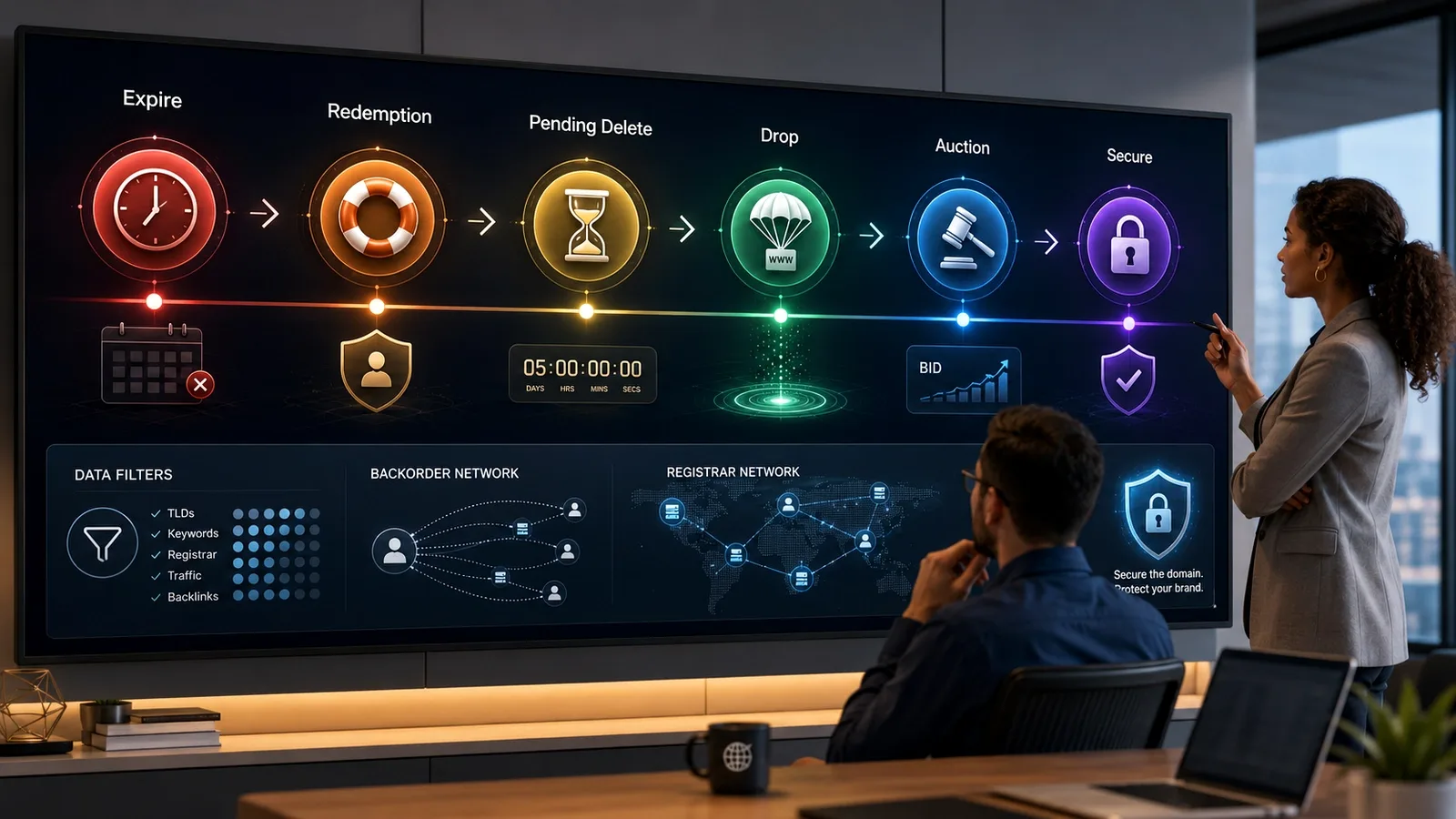
ICANN , when a generic top level domain expires it normally spends thirty days
in what’s called redemptionPeriod. If not restored, the name moves to
pendingDelete for five days. After that, its gone.
ICANN says:
After five days, once the domain has passed through
Pending Delete, it is released and may be registered by anyone on a first come
first serve basis.
Why does this
final five day stage matter? Because the previous owner can no longer renew or
restore the domain after this point.
The race takes
place at the registry registrar provisioning layer. Domain names are not
contested at the DNS root server layer.
Verisign
describes EPP (Extensible Provisioning Protocol) as the
standard protocol that registries and registrars communicate with to perform
registration functions. When a name becomes available someone submits a create
request to the registry. Accepting the first valid request wins.
Place Your Order: Manual Vs Automated Drop
Catching
Unless your
GetFast registrar allows manual registrations during a redemptionGracePeriod
sale you won’t be able to manually compete for a name yourself. Manual
registrations are usually too slow.
At some point
you have to place your order with a drop catching service. How do these
services catch names instantly?
Definition: A
backorder is an instruction to a drop catching service to attempt to register a
specific domain name.
DropCatch
explains its own computer algorithms listen for names to become
available at registration time. Once caught the asset may be sent to auction.
DropCatch says:
Please note that a backorder does NOT GUARANTEE you will
obtain the domain you desire.
Notice
DropCatch doesn’t keep secrets about how the process works or its success rate.
Their technical advantage comes from two sources: removing human delay with
automation, and access through registrar infrastructure.
A commercial
service can monitor expansive pending delete lists, guess when they’ll be
released, get its registrations lined up, and send eligible create requests
across its registrar relationships. Infrastructure details vary and are
probably confidential.
The lesson any
investor can learn from public information is this.
Do not think
you’ll consistently beat proprietary drop catchers with a simple browser page
refresh or by writing your own script. Instead place non exclusive backorders
through multiple legitimate providers, then decide how to manage auction
exposure after the catch.
Pending Delete Drops vs Registrar Pre Releases
Where does the
provider get names from?
Internally
routed expired names do not always make it to public registry pending delete.
GoDaddy explains eligible expired domains on
its platform can show up in GoDaddy Auctions after day twenty six of
expiration. Unsold names can expire, closeout, and then return to the registry.
Pending delete
domains can be expected to make it to public registry drop.
Pre release
domains can show up in the NameJet aftermarket via an expirysourced
wholesale channel before hitting registry pending delete.
Difference
noted. DropCatch tries to catch names after they drop. NameJet offers customers backorders on both
pending deletes as well as inventory it receives pre-release.
The wise move
is to check an incoming order screen before paying for a backorder. Inspect
where the domain is coming from and read the rules.
Life After Catch
Does winning
the race mean instant ownership?
DropCatch
explains when two or more customers backorder the same domain name
it triggers a public auction.
DropCatch says
auctions generally run from three to five days. If someone places a high bid
during the final five minutes the closing time increases. This limits last
minute auction sniping.
NameJet uses competitive bidding to settle who
gets the domain after backorder qualification. The aftermarket buyer’s guide
mentions some auctions are reserved for customers who placed backorders before
release.
So a domains
purchase price may be determined twice.
How the
registrar level infrastructure catches the domain determines which service sees
it first.
Which customers
win each service’s auction determines who gets the name.
Create Your Own Monitoring System. No Bots
Required.Representative image only
Wait what? I
thought catching names was just stuffing a bot and praying.
Building a
secure automated capture bot that doesn’t violate people’s terms of service
sounds like a horrible idea. Luckily, investors can still monitor expiring
domains without direct registry access.
ExpiredDomains.
net monitors pending delete and deleted lists for hundreds of
extensions.
Make it part of
your daily workflow to:
Step
Monitoring Workflow
1
Export/pull the pending delete list
2
Filter for extensions, lengths, keywords, backlinks, historic
revenue, etc
3
Research archived pages and trademarks
4
Place strategic non exclusive backorders
5
Note auction end dates and max bids
6
Audit each name after acquisition
FYI – just
because a domain has backlinks doesn’t mean you should pay high prices for it.
A previously
live domain could have negative SEO, junk links, shady redirects, unused
copyrights, or angry ex customers.
Secure Your New Domain Immediately
Domains should
be secured the moment you acquire them. Whether you intend to list or build.
Setup multi
factor authentication on your registrar account.
Add a registrar lock. ICANN confirms there are
statuses like clientTransferProhibited that can prevent unauthorized domain
transfers.
Auditing
nameservers is always important.
Turn on DNSSEC
when you know what it is and when your registrar and DNS provider support it.
DNSSEC secures your DNS information, not your account credentials. Don’t use
these two methods as a single point of failure.
Retail vs Wholesale: Preparing for the Real
Sale
If you bought
the domain from aftermarket provider it was probably wholesale inventory.
Prepare for
retail.
The retail
value of a domain depends on who’s buying it.
Take the recent
Crypto Godfather catch for example. DomainMarket.com offered it in a direct
sales listing after capture.
Before you
develop or sell the domain always:
Before You Develop
or Sell
Verify ownership with registrars (had an investor nearly buy back
Sedo Landing recently)
Audit equity links and path keywords
Secure email routes
Obtain coverage for residual liability
Not every buyer
is looking for a rezoned parking lot. The right investor is looking for a clean
brandable domain that is secure and protected.
Winning a race
is just part of the process. After buying an expiring name you should carefully
position it for sale to a business that needs it. Proper due diligence not only
prevents acquisition of trash, it helps control costs and maximizes security around
high value names.
Domain
investors compete against algorithms daily. Understanding catch infrastructure
just might give you an edge.


 Representative image only