Lease-to-own programs for premium domains are expanding their reach to corporate clients.
“If only I could afford that domain…” can become “That domain is the right decision for my business.”
Companies launching a new product may need a six-figure domain name but not want to lock up cash in a .COM. Lease To Own options provide a payment plan spreading out payments over time leading to eventual transfer of the domain. There’s some nuance to how this works for accounting purposes and should be reviewed with professionals. For operating expense versus capital expenditure classification, converting a domain purchase into a installment payment plan won’t automatically qualify as Lease to Own. From a commercial standpoint, the advantage is the buyer does not need to spend money upfront.
Freeing Up Consumer Finance
Lease to Own offerings have the potential to open up a new market of buyers.
Instead of needing to justify the cash outlay for a $50,000 purchase, you may be comfortable with the payments appearing as predictable expense on a monthly basis. And as a seller, you get paid over time instead of waiting for a lump sum from the buyer.
Afternic and Atom both offer Lease To Own programs, but handle pricing differently. Afternic has implemented premium pricing tiers for Lease To Own transactions based on length. With Atom, a seller can set the payment plan length and specify a down payment if they wish.
Risk Protection through Technical Ownership
The seller wants to maintain control of the domain until payment is complete.
Atom clarifies: “Once the first payment is made, most domains will be transferred to the buyer’s Atom account. This allows the buyer to modify nameservers and point their domain wherever they wish. The domain will remain inside Atom’s verified registrar account until the transaction is completed.”
Escrow.com offers a similar system based
around their Escrow account. “Once the domain name is secured in our Escrow
account, it is protected throughout the entire agreement term. You can choose
to have payments made monthly, quarterly or yearly.”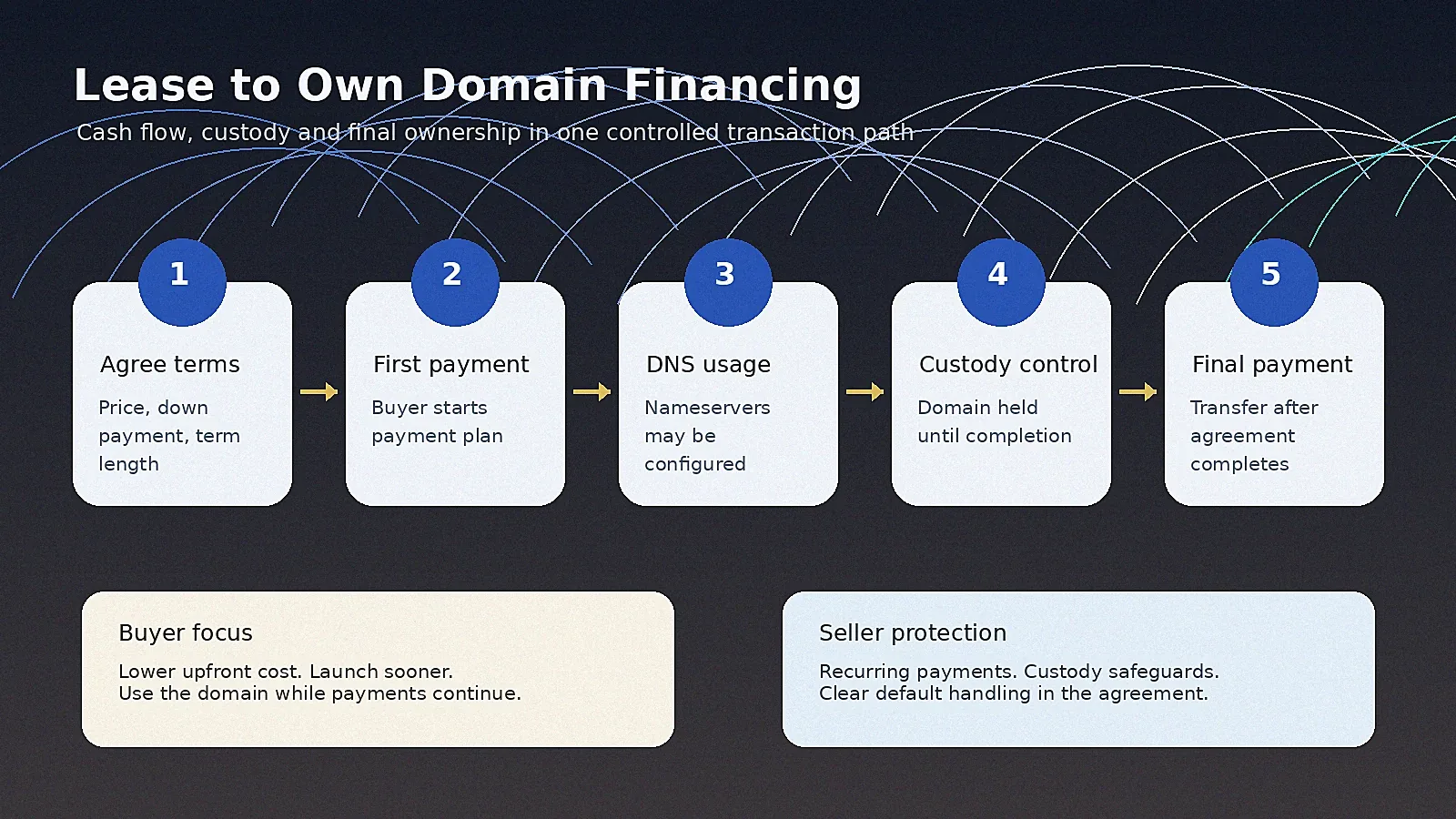
If the buyer stops paying, it depends on your agreement what happens to the domain. Escrow.com mentions the domain “can be returned to the seller if the buyer misses a payment.” Terms of Service vary by platform.
Best Practices for B2B Domain Lease To Own Transactions
1. Treat it like any other domain transaction and perform your due diligence. Trademark, history, and transfer readiness.
2. Compare out-of-pocket expense to Lease To Own totals.
3. Double check down payment, payment schedule, term length, and definitions around early completion.
4. Test any DNS changes prior to your launch date.
5. Monitor automatic payments and renewal date like any othervendor relationship.
6. Consider having any substantial transaction reviewed by legal and accounting.
Financing does not suddenly lower the price of all premium domains. Lease to Own gives companies another option between “need it but can’t afford it now”, and completely owning it.