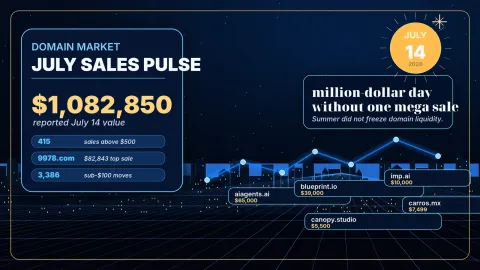
The value in public auction charts is that something we know for sure happened. We know that somebody bought an extension. We know that somebody searched for particular keywords. We know those sales were reported from that marketplace.
Public auction charts don’t show us the entire domain aftermarket.
Domain Sales Happen Offline
The most valuable domains can sell privately.
A company might need a shorter brand name ahead of a product launch. A founder could be trying to acquire the exact matching .com without alerting the press to a funding round. An individual seller might own a one word domain and prefer a discreet negotiation over a public auction.
Domain brokers work in this private space.
The domain won’t be listed inside a live bidding room. The buyer might never speak directly to the seller. A broker researches owners, contacts the individual, sets expectations, ensures confidentiality, and guides the sale toward secure settlement.
Private Brokerage Changes Process, Not Value
Approaching the owner privately doesn’t automatically increase what the domain is worth. But it does change how a motivated buyer searches for the asset, values it, negotiates a fair price, and completes the transfer.
Why Don’t All Sales Show Up On Public Charts?
I hinted at the problem earlier. Public sales leaderboards are important, but incomplete by design.
NameBio boasts that the collection of reported sales now exceeds $3 billion. Its all time sales page lists 6,846,936 sales totaling $3,207,159,449.06 USD.
Notice that word “reported.”
Domains might not appear on public sales charts because someone wanted the transaction to remain private. Maybe the buyer negotiated a low price that the seller doesn’t want to publicize. Maybe the broker can’t disclose the deal. Maybe a corporate buyer used an LLC that doesn’t disclose the ultimate operating brand.
That’s why we can’t state the percentage of total domain sales that will never appear on public leaderboards.
Some have guessed.
When I started buying domains I was told that only 5% of domain sales were ever reported. Others say half of all sales remain private. There may never be a way to quantify this offline market with total accuracy.
Related: Only 10% of Domain Sales are Published Worldwide
The reason we don’t know for sure is simple: There is no centralized public repository mandated to record every domain sale.
Public auction results create evidence we can study. Public sales leaderboards are not an all knowing oracle of the domain aftermarket.
Reasons Buyers Seek Privacy
Most buyers want the domain listed inside an auction marketplace. That creates competition from multiple sources and maximizes seller returns via transparent price discovery.
Private sales answer different buyer needs.
Buyers might prefer to keep their identity hidden.
A technology startup might plan to launch several new products. It could benefit from owning a short version of a product category domain before it files trademarks, secures funding, or hires employees. If executives contact the owner directly, the seller may increase their asking price once they figure out who the buyer is.
Using a broker can reduce this risk.
GoDaddy explains that its Domain Broker Service will keep buyers anonymous throughout the acquisition process. If they accept the offer, the owner will not learn who made the purchase.
Sedo offers a similar service. Buyers who elect to remain anonymous work with a personal broker. That broker negotiates directly with the domain owner on behalf of the anonymous buyer.
Atom explains that its brokers review sales data, analyze the owner, negotiate quietly without exposing the buyer, and follow best practices for escrow, payment, and transfer once an agreement is reached.
Privacy in this context can protect negotiating power. It also prevents speculative noise before an official product launch.
Reasons Owners Avoid the Auction Room
Private sales can also benefit the seller.
Some premium domains appeal to one strategic buyer. If the domain connects to a recognizable brand or category, passing the name inside a crowded bidding room can attract attention. That might not matter if the reserve price is met. The result can look awkward if multiple bidders appear but nobody is willing to pay what the seller wants.
Brokers offer an alternative solution.
Expert brokers know who owns comparable domains. Using those contacts, a broker could approach companies that have the same initials, operate in the same category, or would otherwise benefit from owning the name. Sellers get to decide if they want to allow direct negotiation. Discussions happen without publicly announcing a sale price.
Privacy also protects later pricing strategy.
What if a seller holds multiple related domains? Public disclosure of one sale could skew how future buyers value similar-but-unused domains. With confidentiality, the seller has more flexibility to negotiate without creating a public valuation for every similar asset.
Off Market Domains Aren’t Automatically Illicit
Maybe something illegal happened behind the scenes. It’s possible. A high profile domain should not sell for a very low price without a good explanation.
On the other hand, selling a domain name in private does not prove that something sinister occurred. Privacy may be required to protect the buyer. Privacy may be the preferred method for a seller who wants more control over how many people learn about the sale.
Searching for Off Market Domains
Ready to find domains that are not inside a public auction? Remember these tips:
Define the target name. Search the market. Ask around. Then search again.
The hardest part is knowing what you are looking for. “Find me a good finance domain” is not enough information. Create a list of search terms, preferred extensions, acceptable shortcuts, geographic markets, and budget limits. Then search effectively.
Look inside RDAP records, archived webpages, registrar directories, Google searches, LinkedIn social networks, and URL shorteners. Owners who are not publicly advertising a domain for sale may still own an asset you want. Some are willing to sell. Others may offer to trade.
Think like a broker. Do your research. Reach out to owners directly if you prefer. Use a broker if reaching out yourself is difficult, you value privacy, or negotiations might exceed your comfort level.
Summary:
1. Figure out
what you want.
2. Review current use, public availability, and recent comparable sales.
3. Check registration status using ICANN’s RDAP lookup tool. Visit the website
if possible.
4. Contact owners directly or hire a broker.
5. Set your budget before making an offer.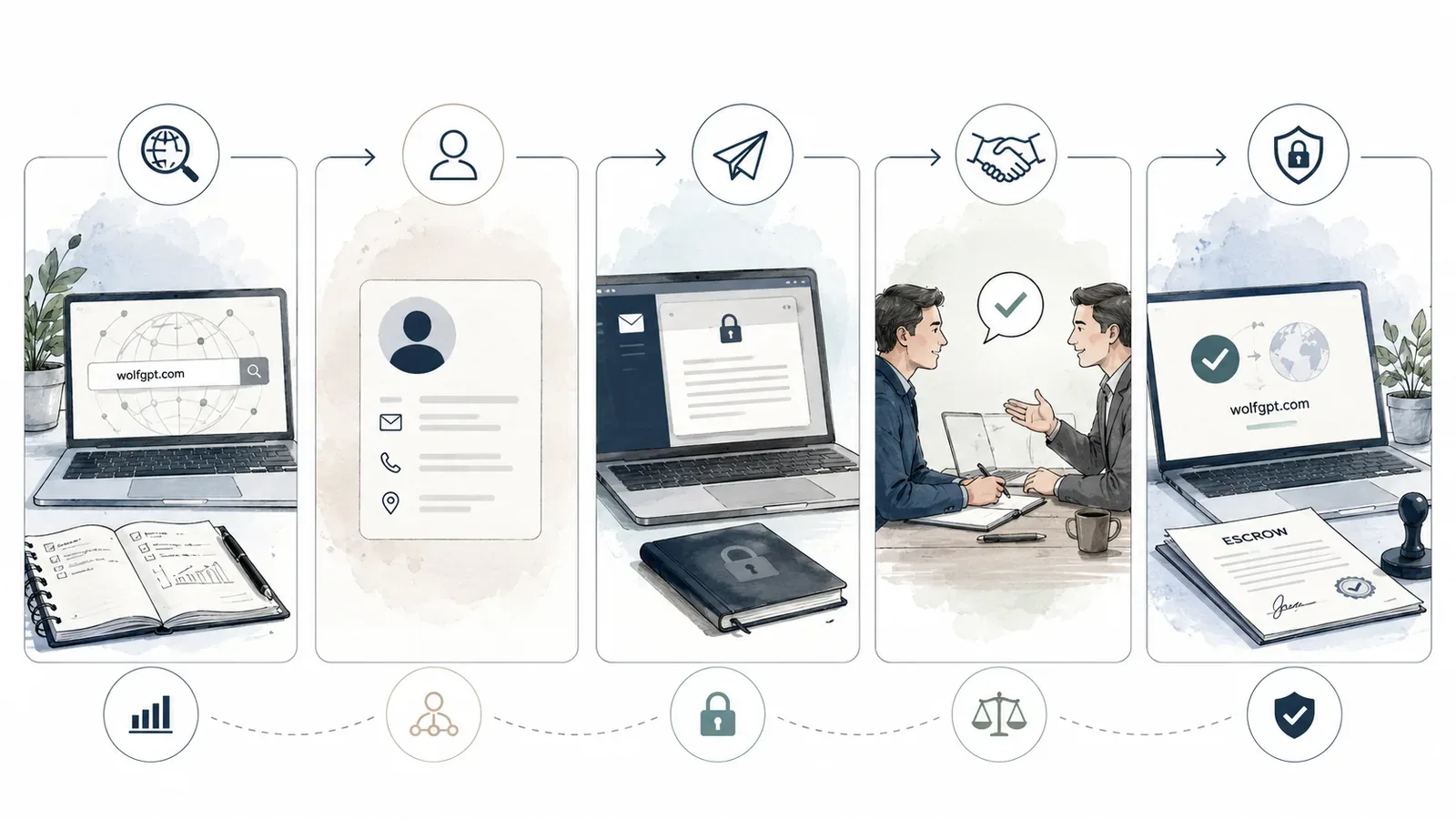
Introduction to Elite Brokers for High Ticket Private Domain Sales
Yes, that title was meant to sound elitist.
Elite domain brokers for high ticket private sales don’t actually work for wizards. Clients hire brokers because it’s often easier to outsource niche work.
Elite means experienced. Good brokers understand who owns targeted domains, how to evaluate realistic pricing, keep buyers anonymous when needed, negotiate counteroffers, and coordinate settlement once a deal is agreed.
Elite brokers also have judgment.
For example, buyers want incredible domains that may or may not be available for negotiation. An elite broker will be honest about competitive prices. Buyers might want to pay millions for a name that won’t realistically sell for more than $25k. Elite brokers can say no.
Atom promotes its broker team as experts who will review similar reported sales, evaluate owner reachability, compare demand inside the category, and analyze probability before approaching the domain owner.
Sedo explains domain brokerage as a service where qualified brokers research and negotiate with domain owners directly on behalf of buyers.
GoDaddy says its broker services uses its network and pricing knowledge to help buyers learn how to reach owners while remaining anonymous.
Notice the common thread here. Elite brokers don’t have access to a secret sales database that regular brokers can’t see.
Elite brokers help people find, value, negotiate, and settle private sales in markets where most buyers and sellers will never participate. Period.
Value Creation vs. Price Discovery in Private Transactions
The difference between public and private sales is noticeable when pricing a domain.
Price discovery can be noisy. Competitive auctions set public prices everyone can see. Private sales do not.
The seller might own a domain name without identifiable comps. Buyers might have a strategic reason to own it. Technical tools can spit out prices, but they cannot calculate every exit strategy.
Private sales should still start with objective benchmarks.
Search past public transactions and highlight similar domains that were sold. Domain extensions matter. Word count matters. Character count matters. Commercial meaning matters. Pronunciation matters. Estimated buyer pool matters. Brandability matters. Availability matters.
Domains bought by investors should not be mixed with domains bought to operate a business. Auction sales are different from private sales. Dates matter too. Older sales dominated by adult brands are not great comparables for shorter .COM domains.
I try to review at least 5 historical comps before guessing what something is worth.
Next, ask subjective questions:
Valuation Factor What Question?
|
Valuation Factor |
What Question? |
|
Brand compression |
Does this domain shorten an existing brand? |
|
Category authority |
Would this domain name help define a market? |
|
Customer confusion |
Will this domain prevent missed visitors? |
|
Expansion room |
Does this domain allow long and short options? |
|
Defensive value |
Would this domain be valuable in the hands of a competitor? |
|
Replacement cost |
What alternatives exist at lower prices? |
|
Timing – capital |
Is the buyer trying to secure a domain for an upcoming launch? |
There is no right number. The final sale price is only as valuable as the negotiation skills of the person who asks.
Sure, the buyer might be willing to pay more just to own the domain. Maybe the seller is motivated to settle for less. Categorized comps, historical charts, and subjective questioning help ensure both parties agree to a fair number that has real supporting evidence.
But please… stop guessing the retail price based on how long the seller owned the domain.
Professionals look at public sales history, review real comparables, analyze objective factors, and weigh subjective elements before deciding what a domain is worth. Others believe a seven figure sale price is reasonable because the owner registered the domain ten years ago.
Domain Valuation is Not Guessing Who Likes the Name Best
Let’s cover one last mistake while reviewing common valuation issues.
Private sales mean nobody else will know the price unless the seller wants to tell them.
Yes, informed buyers should still estimate realistic discounts and growth rates. But don’t fall into the “comparable sales trap”.
Asking price does not equal sold price.
Just because one undisclosed domain sold for $25k does not mean your next private sale will settle for the same amount. Feel free to use that information as a negotiating starting point. Please don’t assume every premium domain is sold for exactly $25k because a similar name sold privately last month.
Privacy Isn’t an Excuse to Skip Verification
Negotiating private sales offline requires confidentiality. Verifying ownership and legitimacy does not mean you have to share confidential details with the other party.
Brokerage service providers understand this principle. Always confirm identities and exchange sensitive information only after taking steps to protect your own transaction. Whether that means using a gotoformation account alias, getting to know the owner directly, or conducting a video call with major firms.
If you ask to see I.D. chances are the seller will too.
One area that many sellers miss is risk verification. Buyers should check registration details and confirm the owner controls the domain via public sources like RDAP. Sellers should verify buyers can pay the agreed upon price before transferring control of a domain.