Domain investing can be summarized in a single sentence. Buy a domain name cheaply and sell it later for more money. The reality is harder work. Most registered domains will never attract a serious offer. A portfolio of potentially valuable domains is curated through selection, patience, pricing discipline, and an understanding of potential buyers.
Real estate is probably a better analogy than stock trading. A domain investor purchases a finite digital asset and pays annual renewal fees until a business sees utility in registering it too. They may want it for a new startup, product launch, local service business, rebrand, or defensive registration.
Domain flipping accelerates the process. An investor purchases an undervalued domain and hopes to sell quickly at a profit. Sometimes that is another domain investor at wholesale prices. Other times it is a business that realizes a domain is solving its naming problem and is worth paying retail for.
Neither method will generate passive income. A registered domain is not an asset until someone can use it for a business purpose. The opportunity disappears if the name is hard to remember, irrelevant, trademarked by someone else, or priced too high.
Is Domain Investing Still Profitable in 2026?
Yes, domains can still be profitable in 2026 but it’ easier-registration years.
There are plenty of registrations each year. DNID reported 392.5 million domains registered across all TLDs as of Q1 2026. That was an increase of 24.1 million domains or 6.5 percent from the previous year.
This large market means opportunity and risk of competition. Most .com domains with basic words are taken. Hundreds of thousands of two-word combinations have also been registered. Research now takes longer at expired-domain auctions and requires deeper industry knowledge.
Know that profitable domains are filtered from the millions of names that aren’t.
Understand the Two Prices of a Domain
Buyers usually pay one of two prices for a domain name.
The wholesale price is what another investor might pay. Few investors pay list price if they can help it, so expect wholesale offers to be lower than the resale value. They may pay quickly, but rarely pay the maximum possible amount.
The retail price is what an end user will pay. An end user is anyone who wants to use the domain for their own business or project. Companies and founders routinely pay retail prices when they need to solve a specific problem.
For example, an investor may purchase Cyber-Gangster.com for $120 at auction. Another investor may discover it later and offer $300 because they can see resale value. A Cyber insurance company that wants to launch a blog under that exact domain name could pay several thousand dollars retail.
The domain itself has not changed. The intended purpose of the buyer changed.
Successful
investors know which buyers are most likely to purchase a domain before setting
a price. Image for illustration only
Domain Flipping Strategies Explained
There is no single way to make money from domains. Most investors dabble in several of the following strategies.
Short-Term Wholesale Flip
Purchase an undervalued domain and flip it to another investor quickly. The margin may be small but the investment returns quickly.
Domains must be easy for another investor to analyze. Shorter .com names, obvious commercial keywords, popular cities or service areas, and expired websites with traffic or customers are common examples.
The advantage is that domains can be flipped quickly. The disadvantage is that a second investor will demand a lower price.
Long-Term End-User Hold
Purchase a domain and wait for an end user to discover it.
Margins can be higher because investors keep more when they bypass resale opportunities. The problem is that some domains may sit for years before a business has need for that specific name.
Best practices encourage keeping domains with accurate contact information and using a simple sales landing page. Racking up costly renewals on unlikely candidates is poor portfolio management.
Domain names that solve a problem faced by many potential buyers tend to sell faster.
Geographic and Niche Investing
Invest only in domains that relate to a specific geography or business category. Services may include local plumbers, electricians, locksmiths, supermarkets, groceries, florists, hotels, tourist attractions, logistics companies, accounting software, Fintech startups, and healthcare software.
Pick one category you understand. Search for how companies name themselves in that industry. Filter unrealistic terms from words that have appeared in clear commercial contexts.
Specialization reduces risk for beginners by aligning your sales strategy with real-world businesses. Buying completely unrelated names in many industries involves hundreds of unknowns.
Profitable Domains Solving Real Problems
Domains that consistently sell solve a real problem.
Memorable names are easy to spell, speak, and remember. They don’t need extensive explaining. It should be easy to imagine the domain on signage, product packaging, ads, or invoices.
Length isn’t as important as clarity. A two-word domain will perform better than a single synonym if both words are common and the phrase presents an obvious commercial use.
Few buyers type hyphens or remember numbers correctly. Customers seeing Fast-4-Loans.com must decide whether “4” is written as text or a numeral. Each.extra cognitive step creates doubt.
Consider relevance of the extension too. .com will always be popular because most Internet users recognize it. Country-code extensions work well in local markets where Germans recognize .de or Italians prefer .it. Newer extensions like .tech and .ai only have value when they match the intended business.
TrueTip: Can you think of at least 5 businesses that might want to register a domain? If not, it’s probably too speculative to purchase.
How to Start Flipping Domains With Zero Budget
The truthful answer is you cannot flip domains forever with $0 budget. Registering a domain incurs an initial registration fee and annual renewal charge.
But that doesn’t mean beginners cannot start learning before buying anything. Study sales reports to understand why certain domains sell and others don’t.
NameBio has >$3 Billion of historical sales data. Analyze trends between short brandable domains versus keyword category terms, geographic combinations, or product & technology phrases.
Practice Without Spending Anything
Create a spreadsheet. List example domains you might buy and research the realistic wholesale and retail prices. Note whether the domain sold later or remains available. Exercise your buying judgement without risking renewal fees.
Search for unregistered domains too. Evaluate why each domain might sell for profit. Then decide whether it’s worth registering. The goal is to practice recognizing valuable names instead of blindly buying everything that meets minimum criteria.
When you do have a small budget, start slowly. Purchasing one or two domains will be more helpful than regretting 100 poor registrations you wish you hadn’ purchased later.
Places to Find Expired Domains to Flip
Expired domains are valuable because the previous owner lost or sold a domain name they once controlled.
Immediately after expiry it does not go into a search directory. Domains may pass through several stages including auctions, redemption periods, and deletions. Learn more about naming periods on the ICANN expired domain lifecycle page.
GoDaddy adds expiring domains into its auctions system approximately 26 days after expiration. GoDaddy also states that more than 50,000 expired domains are added to the marketplace daily as of May 2026.
Having billions of expiring domains means more chances but also more competition. Regardless of the source, learn to review names before wasting time or money bidding.
Other options include backorder/b drop-catching services, marketplace platforms from registrars like Namecheap, GoDaddy, 10M Industries, Domain.com, national ccTLD marketplaces, and private investor forums.
NameJet offers expired domain drop-catching services. DropCatch is another service with a similar drop-catching model focused on catching expiring domains before they reach public auctions.
Use common sense before paying for a service. Auctions are competitive because everyone else thinks that too. Set your maximum price before other people start bidding against you.
Wholesale Markets Sell Directly to Domain Investors
Investors can also purchase domains directly from other sellers.
Communities like Wholeslme often list discounted portfolios for bulk sale. Some domain names will sell below retail prices because owners need quick liquidity. Real savings exist but lower prices don’t always mean investment quality.
If a domain was cheap for a reason, it will stay cheap for buyers.
Always check the registration history viaEWCO, scan previous website content using the Wayback Machine, renewal fees for special extensions, past sales prices, and legal risk. Ask the seller for proof of control if it isn’ already in your own WHOIS database.
Use an escrow service for purchases over a trivial amount. Buying a portfolio because the price per-domain is cheap does not exempt you from due-diligence. A carefully selected portfolio of 10 names is easier to manage than 100 names with questionable buyer demand.
Hand Register Domains
Registering a never-before-used domain that is currently available for sale. Yes, it still works occasionally.
Timing is the major challenge. Ideally you discover a new trend, product category, or service area before specific domains become popular. By the time you notice mainstream interest, hundreds of great words probably already registered.
Domain flipping is not about registering every variant of popular names. Select a handful of undervalued terms that remain useful when the trend cools.
Passed the same tests. If you wouldn’ paylistprice,it flip.
Domain Flipping Checklist for Beginners
To keep this guide simple and relevant, here’ beginner workflow that also covers most edge cases.
Step 1: Focus On One Industry
Pick an industry you understand. That may be dental clinics, lawyers, local restaurants, fashion brands, ecommerce stores selling handcrafted goods, financial services, logistics businesses, dentists, tattoo artists, language schools, yoga instructors, publishing companies, furniture stores, coffee shops, plumbing services, dog grooming services, or virtually anything else with commercial websites.
Search how real businesses name themselves. Lookup every term that sounds unusual or spammy. Businesses tend to follow convention with a handful of exceptions.
Step 2: Create a Shortlist of Potential Domains
Use expired-domain auctions, name generation tools searching for unused domains, and manually search for good names that aren’ already taken. But do not buy anything yet.
Write down each domain, note the extension, how much you could purchase it for, annual renewal cost, estimated resale value, length in characters, keyword analysis, buyer types, and why you considered it.
Step 3: Research Recent Comparable Sales
Find previous sales of similar domains using NameBio or another aftermarket sales platform.
Don’ base your valuation on a single outlier sale. Instead compare domains of the same extension and length containing similar keywords with obvious commercial intent. Separate wholesale from retail sale prices when necessary.
Step 4: Review History and Existing Backlinks
Past website history and backlinks matter. Both can increase value if they are legitimate, and both present risk if they were created maliciously.
Past spam or malicious uses creates risk. Clean organic backlinks point to legitimate interest and potential revenue.
Step 5: Check for Trademark Risk
Try not to register names that are trademark-infringing. A domain being available does not mean someone else hasn’t trademarked a similar phrase.
Search the USPTO trademark database for names that sound similar to products and services commonly sold under that name. Search for existing businesses too.
Step 6: Set a Maximum Price You’ Will Pay
Work backwards from your estimated resale value. If you believe a domain could sell for $200 later, then how much should you pay to purchase it now?
Remember acquisition cost isn’t everything. Factor in original cost, marketplace commissions, transfer fees (if applicable), and a few years’ worth of renewal fees. That “bargain” domain you find for $25 suddenly looks less attractive when the total investment reaches $500.
Step 7: Buy Only Good Names
Only buy domains that pass your vetting process. Waiting won’t hurt your portfolio.
You don’t need hundreds of names. A carefully curated selection of domains will outperform a larger list of weak names with less commercial value.
Put Every Domain on Sales Landing Page
Domains can’t generate inquiries if buyers don’t realize they’re available.
A sales landing page immediately tells anyone visiting that the domain is for sale. It can offer a price, make offer button, request-valuation option, or lease-to-own program.
Afternic provides several sales landing page options to decide if your domains are for sale or park. Sedo promo page explains that its listing plan offers several custom layouts for buy-now and make offer domains.
Custom landing pages are also acceptable if you’re managing domains directly. Simple, clean, and responsive design matters most. Ensure visitors understand the domain is for sale and how to safely inquire.
Don’t clutter page with unrelated affiliate links, walls of text, or multiple calls-to-action.
List Them Where Buyers Look
A sales landing page collects direct visitors. Most buyers find domains on aftermarket platforms and registrar sales tools.
Afternic lists domains across many registrar search results thanks to its own distribution network. Sedo also offers a separate sales platform with international reach.
Multi-listing increases opportunities but updates become tedious. Once a domain sells, delete expired listings quickly. Outdated records create confusion and avoidable disputes later.
Price should remain consistent across all channels. Showing multiple prices for the same domain creates confusion and may reduce trust when buyers find cheaper prices elsewhere.
Use a spreadsheet to record the domain name, registered owner, renewal date reminder, sales landing page provider, where the domain is listed, the asking price, minimum acceptable price, and any inquiry history.
Outbound prospecting works but is easily abused
Prospecting means reaching out to real businesses who could benefit from owning your domain.
In select situations this can work effectively. An untapped drop-catch can sometimes offer value if the name aligns perfectly. A local business with a complicated URL might appreciate a shortcut. Funded startups may own the brand name they literally cannot register.
Your email should be concise, to the point, and explain why the domain is relevant to their business. Include a link to your sales landing page with instructions on how to reply. Avoid pestering businesses that decline to buy.
Bulk emailing is never acceptable. Not only will it erode trust, but some countries regulate how businesses communicate with potential customers. Spam may be unsolicited by definition, but there are laws in place that dictate selling domains is acceptable.
Research a handful of ideal customers instead of emailing thousands of strangers.
Use Secure Payments and Transfer Like an Investor
Domain flips aren’t finalized until payment received and domain access transferred.
Using a reputable escrow service makes life easier for both parties. Escrow explains the stages of its secure domain transaction process.
Requesting instant transfers via an account push only works if your buyer uses the same registrar. Otherwise you may need access to an authorization code. Don’t hesitate to ask if you aren’ provided one. ICANN states that transfers between registrars always require human intervention.
Think of this code like a password and protect it accordingly. Only send through methods recognized by the escrow provider or domain sales marketplace.
Quickly verify the buyer received the domain and that funds were released as agreed. Update your records too.
Monitor Profitable Metrics
Domains are tiny businesses. Numbers should be visible.
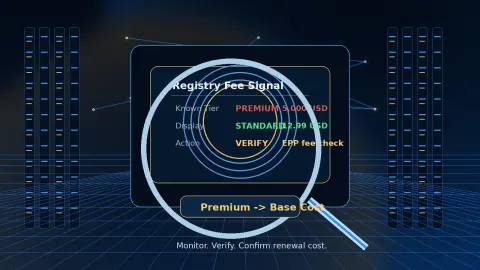
Metrics should include total cost paid, annual portfolio renewal fees, commissions paid to sales platforms, payment processing fees, average portfolio age, inquiry count, sales count, and net profit after expenses.
Portfolio renewal fees come up a lot. A domain portfolio can hemorrhage cash if all names are treated equally. Poor names eat into renewal budget you could be investing in better names.
Sell-through rate is more important than amassing names. A portfolio of 10 great domains is better than 1,000 useless ones collecting dust.
Prune portfolio before each year’ renewals. Remove domains that fail the due-diligence test from last year.
Four Common Mistakes Made by Beginners
Buying too fast. Overcommitting to trends. Overpricing domains. Ignoring renewal fees. Spamming businesses. Transferring domains without securing payments. Relying too heavilyon automatic valuation tools.
Domain Flipping Takes Time to Learn
Domain flipping and investing can be profitable, but slow and steady wins the race.
Begin with research. Study domains that have sold previously. Explore expired-domain auctions but avoid registering every name you think someone else might want.
The fundamental test of a profitable domain is knowing why users would pay list price instead of letting it expire. If the answer is obvious, it may earn a spot in your portfolio. If it requires guessing, don’ take the risk.