Every domain investor at some point experiences this brief moment of silence. You may never vocalize it but hear me out.
You look at a domain name. Could be one you just found, could be one you owned for months. You look at it and something clicks. It doesn’t just feel good. It doesn’t just feel catchy. It feels heavy.
And then you think about selling it.
Immediately after that though, another thought comes to mind.
How much is this worth?
It’s this moment that separates investors from collectors. Registering domains is easy. Knowing their value is where it all starts.
________________________________________
Truth be told, most newbies approach valuation looking for a loophole.
“A quick way, right? There’s gotta be an app that spits out prices at the click of a button.”
You search for an appraisal tool. Something you can paste a domain in, press enter, and tell you what it’s worth without any second guessing.
But that’s not how it works…
Domain valuation is part art and part science. There’s observation, comparison, instinct, and market knowledge all mixed into one.
Tools can help you get there but they won’t do the work for you. Once you realize that, the process becomes far less daunting.
________________________________________
Let’s get one thing straight right off the bat.
Domains do not have a fixed price tag.
Unlike products you purchase at the store with prices clearly labeled, domain names can change value dramatically based on who’s viewing it, when they’ re viewing it, and why they’ re interested.
This also explains how one domain could sit on your portfolio for years and literally sell overnight.
The value didn’t change overnight. The right buyer just happened to come along.
________________________________________
Layer 1: How Does It Feel?
Before you jump into any tool or website there’ s one human element that many people skip over completely.
Look at the domain. Say it out loud. Pause for a second.
Would a real business use this?
How does it sound when you say it?
Could you see this on a website? Or an app? Or maybe even a billboard?
Look at these two:
• BlockJoy. com feels complete and functional
• FunnyGifts4UToday. com feels cluttered and noisy
Your gut reaction is important than you may realize. Most buyers won’t pull up a spreadsheet before making an offer. They’ll let their instincts guide them first.
________________________________________
Comparable Sales: Your True North
If there’ s one thing that will anchor you down with valuation, it’ s comps or comparable sales.
Essentially, you want to find out what similar domains have sold for recently. Not the same name exact. But maybe names that are similar in length, industry, structure, keyword relevance, etc.
There’ s a few places to start:
• NameBio
• DNJournal
• look at marketplace sales history
These websites are helpful but think of them more as knowledge bases. They tell you how the market reacts, where interest is, and how certain factors affect sales.
________________________________________
Here’ s a basic example:
Let’ s pretend you just stumbled upon SlideLevel. com. It feels good. Maybe too good. Instead of guessing, you decide to check recent sales.
You find:
• SlideShare. com sold for X amount
• Levelup. com sold at a medium price point
Now you have a range to start from. You know higher end domains sold for X. You know lower end went for less. You can start carving your domain somewhere in between based on quality, length, and brandability.
That’ s what comps do for you. They won’ t make you rich overnight, but they’ ll stop you from pricing way too high.
________________________________________
Keyword Synergy: Not What You Think
Keywords are still important but not for the reason many beginners think.
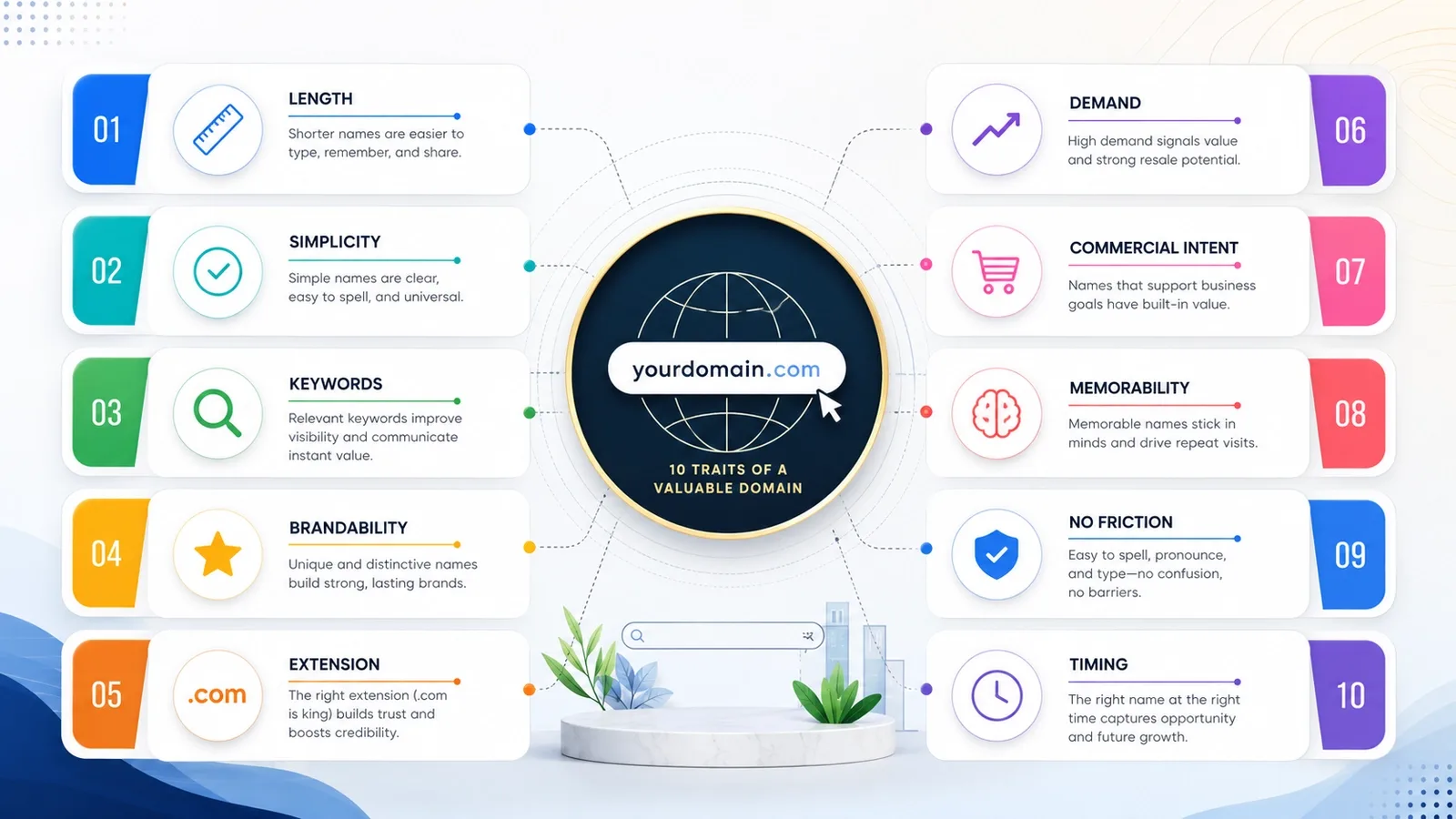
Throwing as many keywords into a domain won’ t automatically increase value. However, if there’ s actual demand for those keywords in the real world, domains that include them will always perform better.
For example, domains that target:
• finance
• health
• software (SaaS)
• artificial intelligence (AI)
• digital services
tend to sell better because businesses are already investing money in those industries.
________________________________________
But it’ s all about balance.
InsuranceDiscountsAndDealsOnline.com is a great example of a very targeted niche but it sounds very long and slightly forced. InsuranceOverlap.com feels shorter, simpler, and more brandable.
Both could sell. But they target different buyers. Knowing the difference can help you price more accurately.
________________________________________
Tools: They Don’t Make You Rich
There are quite a few domain appraisal tools out there. They’ re great when used correctly.
Here’ s a small list to get you familiar:
• GoDaddy Appraisal
• Estibot
• Sedo’s valuation tool
You type in your domain name and boom. An estimated value pops out within seconds.
The problem is, many people get married to that number.
Instead of thinking, “This is how much my domain is worth.” You should be thinking, “Is this number realistic given my research?”
Tools are literally algorithms at this point. They recognize patterns and identify keywords. But they don’ t understand what you want the domain for.
Use them. But only as a starting point.
________________________________________
Mindset: The Value You Can’ t See
This is the fun part. Domain valuation is subjective because the person on the other end has a story.
When someone sees a domain name, they don’ t just think “Oh this is available.” They imagine what they could do with it.
Imagine if you were going to build a platform called “ EarthBuzz ”. And then you searched for EarthBuzz. com and found it.
It’s already branded. It feels like it was made for you. That type of emotional attachment is what pushes many buyers to pay more.
________________________________________
Length Matters: Keep it Short
Nobody likes to read long domains. It’ s simple and straight to the point.
Most premium domains are under 10 characters not including the extension. The shorter the better. Easy to remember, easy to brand, and lets you get your point across quickly.
Take a look at these:
• BrightPay. com
• TheQuickOnlinePaymentSolution. com
Pretty obvious which one is more pleasing to the eye. Length impacts perception.
________________________________________
Domain Extension: Yes .com still Rules
Just because you didn’ t see it above doesn’ t mean the extension doesn’ t matter.
.com will always be the king. It’ s universal, clean, and favored by 90% of businesses. But that doesn’ t mean others aren’ t valuable.
Extensions like .ai and .io have become quite popular with tech founders and startups.
earthware. ai feels niche to the ai industry.
earthware. com feels broad and ready for anything.
Both can be valuable. Just depends on who you’ re targeting.
________________________________________
Timing: When Opportunity Meets Demand
Some domains are ahead of their time. Other domains ride the wave of heavy demand.
Sometimes you won’ t know why a certain niche is blowing up. Other times you prediction becomes reality.
AI became huge as the industry took off.
WorkFromHome surged as the world shifted to remote.
You never know when timing will play a factor. But you can try to anticipate it.
________________________________________
How to Really Appraise a Domain
If you want a simple step by step guide that you can follow each time, think layers.
Quick Valuation Layers Table
|
Layer |
What to Check |
Why It Matters |
Best Use |
|
Human feel |
Sound, simplicity, brand fit |
First impression shapes buyer interest |
Use before tools |
|
Comparable sales |
Similar names, length, niche, extension |
Anchors price expectations |
Use for pricing range |
|
Keyword synergy |
Demand behind the word or phrase |
Shows business value |
Use for commercial names |
|
Extension fit |
.com, .ai, .io or niche extension |
Changes buyer pool and ceiling |
Use for positioning |
|
Buyer logic |
Who would buy it and why |
Turns guessing into strategy |
Use before listing |
Ask yourself a few questions before diving into prices.
• Does this domain feel like a brand already?
Next, hop on over to these sites to validate your hypothesis.
• Check recent comparable sales
• Look for keyword synergy
• Does the extension make sense?
Once you do that, try a tool. Get a rough estimate. Not your answer, but a suggestion.
Lastly, ask yourself: who would buy this? And why would they buy it?
Understand your buyer and you’ ll understand your value.
________________________________________
A Step by Step Example
Let’ s pretend we stumbled upon WanderLens. com.
Looks good right? Let’ s dig into why.
Feels brandable. Short. Easy to pronounce. Fits well in the travel/photo niche.
Checked recent sales, similar names are doing well. Threw it into a couple tools. Got a decent estimate back.
Time to think about buyers.
Maybe someone is making a photo travel app.
Or maybe it’ s an online camera store.
Could even be someone starting a travel blog.
Once you name real buyers and what they could do with your domain, you’ re no longer guessing.
________________________________________
Don’t Let These Rookie Mistakes Get You Fooled
Everyone makes mistakes. Even if you’ve been doing this for years. The second money is involved, emotions are often tied to decision-making. Here’ s some of the most common things I see:
• way overpricing DIY appraisals
• not considering the buyer side enough
• getting attached to your own domains
• pricing way too low and leaving money on the table
• not being patient enough for the right buyer
Avoiding these won’ t guarantee success. But it will put you in a better position when making decisions.
________________________________________
Why Valuation Gets Easier with Experience
When you start, pricing feels like a guessing game. You overthink every decision. You start to question if you even know what you’ re doing.
But something happens over time.
You start to recognize similarities between domains you come across and domains that have sold before.
Your memory starts to recall what sold and what didn’ t. You begin to understand what feels overpriced versus what feels right.
Eventually, you won’ t get every price right. But you will start to trust your gut more than anything.
________________________________________
Conclusion: Value is Found, Not Stated
You don’ t go into a marketplace and declare your domain is worth $ xx,xxx. You research, compare, analyze, and position it accordingly.
And sometimes value finds you.
You could list a domain for way below market thinking you’ ll get a quick sale. But then the perfect buyer comes along.. and they revert with an offer above your target.
Don’ t get me wrong. Quick sales happen. So do epics.
Just remember, it’ s a marathon, not a sprint.
If you stay hungry, stay committed to learning, and treat valuation like a skill you can always improve. You will start to notice a shift.
You won’ t ask yourself “What is this domain worth?”
You will ask, “Why would someone pay this much for my domain?”
And when you start thinking that way, you’ ve learned everything you need to know.