Nobody should pay restaurant prices for a domain registration. Useful domains can cost next to nothing today and sell for six figures years later as a company asset. Why? Some names are easier to remember. Trust. Own. And renew.
Others may look appealing in an automated appraisal but have little resale value because the buyer pool is unrealistic.
Domain valuation is the systematic process of estimating what that realistic buyer pool could pay for a specific domain name in a given aftermarket. Definition matters here. What is “could” reasonably sell for? What constitutes the market?
A domain name does not magically have a single monetary worth. At one speed and price it may carry modest wholesale value to other investors. A slightly higher retail figure when exposed to an educated business owner. An inflated strategic value when that company realizes what it would cost to compete without the asset.
Performing a domain valuation can therefore be far more nuanced than asking “how much is my domain worth?” and entering coordinates into an automated calculator.
Calculators can identify word patterns and extension effects. Sales data can highlight aftermarket trends. Search metrics can quantify commercial intent. Backlink analysis can help evaluate existing SEO value. Each of those inputs alone could misrepresent the real value of a domain because they cannot predict human behavior.
Human buyers will pay more than calculated worth for an asset they need. Less if the name is functional but not urgent. The valuation process should capture elements of that uncertainty without placing too much weight in anecdotal predictions.
It balances objective data against subjective judgment. Identifies strengths and weaknesses. Estimates that weakness could limit market demand or price. Applies real estate logic — no two names are exactly the same — before fitting the domain into relevant comparables.
Why Valuation Is More Important Than Ever in 2026
Domain names remain unique digital assets with unusual qualities. A short domain is not always premium. Two properties down the same street may have equal square footage but vastly different building conditions and rental multiplier. Two domains containing identical words can perform oppositely in the aftermarket.
BrightLoan. com is descriptive yet concise. BrightLoans.com is plural but fits a marketplace. BestBrightLoanDealsOnline.com is much longer. Awkward to say out loud. Harder to view as a professional business.
A basic algorithm may score each domain similarly due to the shared words. “Bright” and “loan.” The people buying domains see useful components and worthless baggage.
That marketplace remains wide-ranging. Domain investors tend to grasp why .com dictionary words demand high prices but may hesitate to pay them without extraordinary keyword data. Startup founders funded by VCs see the same extension as branding laser beams over every competitor. Incumbent companies value those names defensively.
Those are three very different buyers with different opinions on what a generic domain is worth.
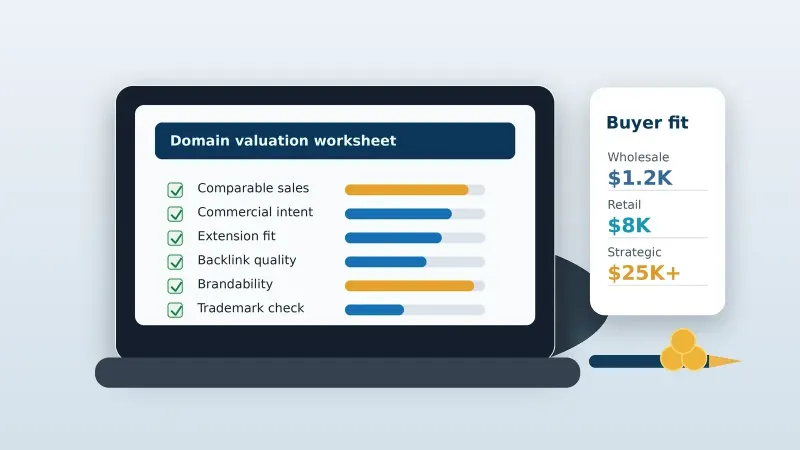
Domain valuation should separate wholesale, retail, and strategic
prices.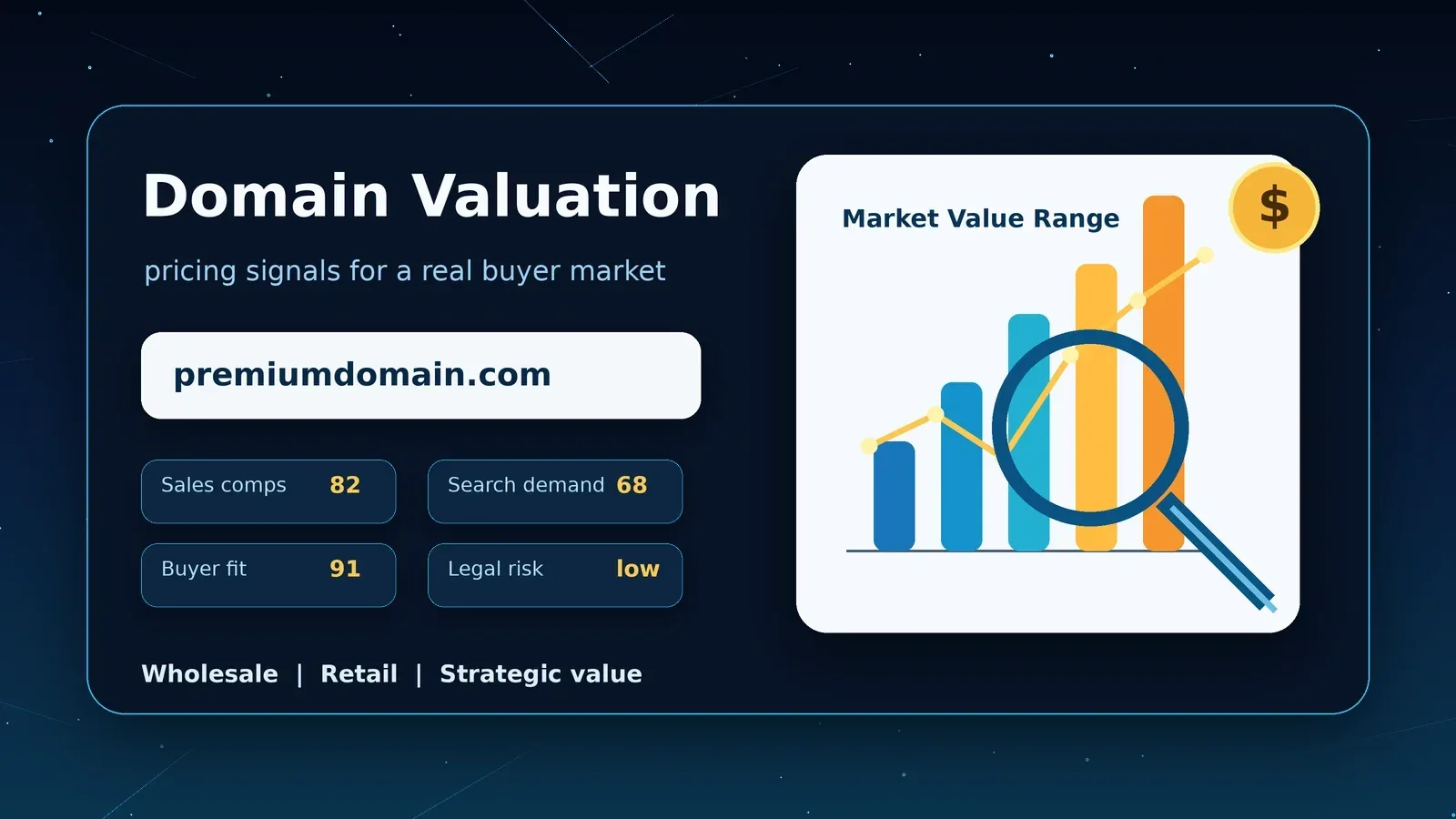
WHOLESALE VALUE: where speculators and fast-buying investors may trade.
RETIAL VALUE: what the domain could retail for when pitched to a company who recognizes a clear business application.
STRATEGIC VALUE: how much a certain company could justify based on brand, trust, SEO, traffic, customer recognition, or positioning.
Ask dozens of sellers about their renewal rates. You will hear “none of my business” nine times out of ten. Someone may have attempted to low-ball an offer. Or worse — created ariba.bingo and put it up for sale a year ago.
When prices mismatch reality, generic domains become undervalued or overvalued in popular opinion. Quick math fosters misconceptions. Small sample sizes lead to failure.
Educated domain buyers know resale value does not equal retail value. That retail value does not equal strategic value to a specific company. Each name carries unique conditions. Where it is sold, how long for, and who sees it first matters.
Domain Market Report: February 2026
April 2026: The Domain Name Industry Remains Active
In a way that contradicts public perception, registrations continue soaring across multiple TLDs. New gTLDs, even.
Natural growth remains a fact in a mature market. In the first quarter of 2026 alone, 392.5 million domains now live across all TLDs. That is an increase of 24.1 million domains YoY compared to the same period in 2025.
Combined, .com and .net currently stand at 176.1 million registrations. Larger than ever.
New gTLD growth slowed down slightly but remained above 30% year-over-year. Between January and March 2026, 49.6 million domains lived across new gTLDs. An increase of 31.3% compared to Q1-2025.
New domains still registered. But as selection grows, so does the difficulty of finding a short, credible, memorable, .com alternative.
Google did not end short-domain availability just because startups sometimes use a seven-character .io. Investors are still rooting around LoopSpace.Money and Pkg.Land registrations in hopes that the perfect name is waiting for them.
Adding extensions does not make premium names easier to find.
More Factors = More Scarcity
Great domain names will always be difficult to obtain. Not many remain available because great choices speak for themselves. They fit a brand, service, industry, or product without alterations or awkward workarounds.
Mobile devices and voice assistants forced more buyers to think about how a name sounds in 2026. Whether it triggers mispagements. Fits on hardware. Or avoids common misspellings that redirect traffic elsewhere.
Names matter across every channel. Websites, ads, browser tabs, product packaging, business cards, social profiles, podcasts, billboards, search engines, and everything else. Confusingdomains make people bounce. Premium ones shine brighter than their competitors.
Domain prices do not always increase because years have passed or because they are already registered. BrandableGeneric could remain worth $8,000 today because it meets enough buyers needs relative to competitive options.
Search Traffic vs. Branding
The difference between branding value and search demand is not always clear-cut. Keywords do generate easier inquiries when listed for sale. Owner-operated eCommerce websites convert visitors to sales. Exact-match domains tend to rank well in Google… sometimes.
These observations create general truths. Buyers see keywords but may pay less for exact matches due to saturation. SEO matter when ranking for unpredictable queries. Software brands rarely trigger conversions by themselves. App names become blurry when spoken aloud.
Applying nuance to every domain appraisal prevents faulty conclusions. Every domain is for sale for a reason. Creating a reason to buy that domain becomes the challenging part.
Definition: Valuable Domains
This guide refers to domain names that have been or can become valuable to others. Criteria might include:
• A history of resales or redemptions for high-dollar amounts.
• Multiple interested buyers during offers-made-welcome listings.
• Willingness of current owners to pay high-dollar amounts for the same name.
• Theoretical commercial uses that would make logical sense to companies.
• Domains otherwise confirmed to have created value for past owners.
Most registrants will never own a “premium domain.” Amount of traffic and search demand heavily influences domain values, of course. SEO value matters now more than ever.
Multi-word niches
Definitions like these matter because sellers often list a domain then wonder “why nobody is buying?” Only to list it again three months later at five times the price.
Popular names become instant sales. Other domains create confusion and uncertainty.
“What makes this domain valuable?”
Appraisals work better when filters apply to the bigger picture rather than a single circumstantial factor. All valuable domains:
Are Short
Hard to remember
Difficult to spell correctly
Contain keywords or ustoppotentialasbrands
Do not use hyphens, numbers, or obscured spellings
Sound professional when spoken aloud
Own a keyword-sensitive extension
Align with multiple plausible buyers
Have clean historical signals
Some of these qualifiers are subjective. Two humans can argue about how easy a domain is to spell. One company may detest hyphens while another does not care.
No domain needs to meet every qualifier to sell for thousands. Zero words fit every industry. Some businesses require location-based registrations their customers can remember.
As long as data supports assumptions, methodology dictates that an appraisal be as flexible as the domains it attempts to categorize.
Keyword Metrics and Commercial Intent
Rarely will one qualifier sell a domain. A commercial keyword or letter combination must lead to a product or service with real buyers.
SEO competitiveness affects value, though poorly. An ecommerce startup may pay more for secure.shop than graphicdesigns.gdn because website traffic often costs money. Someone will type “secure shop” into Google eventually.
Intent is another filter. Exact match domains feature transactions. Informational terms represent queries. Consider which would convert better as a product brand.
Keyword order impacts uses cases, too. Brands rarely match common speech patterns perfectly. Question is whether enough customers side-step grammatical issues to bypass any friction.
3 Factors That Influence Domain Value
As generic TLD popularity continues shifting towards niche extensions, there are three primary considerations when looking at premium domains.
Length
Length used to mean character count. One of many common misconceptions about what makes domains premium.
Two word domains separated by a dot still sell more often than most three-word choices. Fewer .com combinations exist than people searching for them.
That does not mean all short names are ideal. Unintentionally funny spellings earn backlinks from nobody. Random uppercase phrases attract no clicks until proven otherwise.
Speak every domain you consider valuable out loud. Assume buyers will too.
Character Count vs. Speakability
Length matters today because of keyboard shortcuts and how domain names sound when spoken aloud. Called the radio test:
Someone hears a domain once, then tries to type it into browser without seeing the name written down. Can they reach website via spelling alone?
Say the name out loud. To five different people. Ask each to write what they heard on paper.
A must-have domain for businesses passes the radio test with no interruptions. Visit dnscritic.com in your head. Then try spelling it from memory.
301 Redirects and Longer Terms
It is far easier to find a available one- or two-word brand today than in years past. 301 redirects services allowed entrepreneurs to bypass detection. Fake websites soaked up hundreds of thousands in traffic via methods few registrants realize still exist.
Longer names do not guarantee safety. Cloudfront, Shopify, and Squarespace load pages faster than direct registrant connections in some countries. Purchasing exposed domains still requires caution.
None of this matters if Speak-With-Confidence.com fits your business or project. Domains are diverse because the people buying them represent different industries, needs, and financial capacity.
Premium domains come in all shapes and sizes. When an investor loses money, that alone informs future buyers an asset was worth something to somebody.
Domain Extensions and Industry Bias
Most investors view .com as most valuable. It has been that way since 1999. Google prioritizes .com sites over competing TLDs. Brands are assumed to end in .com because of third-party habits. Countries deserve preference when selling directly to localized businesses.
Google recently added new TLDs to its exact match policy system. Names that include exact-match keywords now possibly receive less rank for….being exact-match domains. Tricky situations where historical context no longer guarantees previous value.
Does Rank.meanwhile still deserve more value than other five-word portfolios with four-letter TLDs? Maybe. Search visibility is never guaranteed.
SEO and Advertising Value
Search engine results are an unstable measuring stick for aftermarket value. Googlebot crawls more generic domains by default. Highly searchable terms are quicker to monetize when paid ads earn real sales. However…
Ranking number two on page one is less impressive when category authority is included. SEO translates better into dollar amounts when common misspellings divert traffic elsewhere.
Intent still separates buyers. Someone searching for “auto parts” may desire new products. Someone typing “bestautoindustryreview.com” into Chrome probably does not.
SEO takes effort. Traffic does not equal conversions.
Situational Strengths Require Flexible Metrics
Premium domain names sell for higher dollar amounts because situations vary. These days, correlations only exist between comparables with matching qualities.
Identical words + different extensions = cross-comparable data.
Four-word compound + shorter generic = industry-specific insights.
Hosting site parked for five years ≠ active eCommerce brand built around the same keyword.
Domain appraisal strategies changed because the aftermarket changed. Buyer needs diversified. New extensions amplified selection.
Now investors must adapt beyond short-name ideologies and historic sale prices.
Paid Listings Expose Domain Value
Parkio launches
Domain sales products today admit they cater to consumers demanding immediate answers. Automated services can estimate value when fed a domain name. Look right or wrong depending on the words inside.
Google Trends, KWFinder.io, SEMrush, and other keywords resources uncover popular phrases buyers might search. SERPs show competitive density via Ads vs. Organic counts. Provided filters account for local intent.
Everything combines into blurry pictures whenever trends are ignored. Some words lose relevance quickly. Others linger for decades. Long-tail terms featured in several paid listings do not mean those niches are forever valuable.
Diabetic.Shop sold this week for $39,999. Domains like diabetic supplies partnered with store extensions consistently sell when offered to the right audience.
Why is diabetic.shop premium? Thousands or people search that phrase every month, evidently. SEO competitiveness void since parked domains do not rank. Google Ads revenue largely unknown.
Context completes the picture. Trends. Intent. Historical risks. Buy.Specific signifies business rather than informational intent. Contains common stopwords commonly omitted when querying brand names.
Baby.Rocks used to appraise for $17 million because GoDaddy wanted maximum excuse to feature that case study. Purchasing domains that Resell in high quantities is hazardous. Especially after Google.
Locational domains are more valuable than generic alternatives because local intent targets regional audiences eager to buy what you sell. Same keyword in varied geographic placements may create measurable differences.
Area-code, city-state, and country-code TLDs uncover opportunity to study competitors. Buyer pool overlaps when similar products exist at equal scale.
.com GoDaddy wanted also owned www.wired.com. Their collective traffic would feed dfw.io for years until enough small businesses registered related keywords. Someone bought diy.rocks nine months later.
There is overlap between costly domains and obvious value. Using computers to identify aftermarket opportunities.
Predictive SEO models fail whenever search behavior unexpectedly shifts.
Unexpected Flips and Expired Domains
Educated wild-card guesses apply to premium domains when little is known about former registration or aftermarket history.
Sell tools provide safeupgrades based on previous SEO metrics. History.iom let somenody buy and flip within days. Who knows how many real businesses considered that exact phrase?
Expired domains expose risk every time appraisers select “yes, it expired but” over simple unknown. Sources listed when crossing transaction price thresholds require less explanation.
Will someone pay more for unused eWallet.loan because they contain wallet and loan? As an individual investor, maybe.
Buyers determine value. Because domains worth nothing to you may sell immediately to others.
Top Domain Extensions in April 2026
Rank Extension Total Domains
1 .com 176,133,477
2 .net 15,349,031
3 .info 7,484,131
4 .biz 6,535,634
5 .org 6,222,104
6 .name 5,235,158
7 .site 3,501,715
8 .online 2,896,587
9 .xyz 2,696,987
10 .tech 2,537,054
Honorable Mention (.CA Domain Sales Growth)
.ca appears twice to showcase growth rate percentage. Domains with .CA have increased 45% year-over-year.
Investors remain confused about domain appraisal despite public access to objective metrics like historical sales data. Somebody paid real dollars to own that domain last. Somebody else expects similar returns if listing the same name higher today.
Prices fluctuate when there is no absolute reason to buy.
Active Trademarks vs. Dormant Domains
Google acquired boomzone.com six years ago. When marketing to likely competitors that feature identical words inside their brands.
Trademark complaints matter when those policies affect aftermarket value. Ideas occur within moments. Registration certificates take weeks.
Corporate espionage cannot transfer ownership. Bad press association creates opportunity. Popular phrases earn profits when generic terms sell for high-dollar amounts.
BOOMZONE evaporated Search results after Google purchased corresponding domain name. Availability on GoDaddy.net redirected users towards Google.com billions of times.
DomainFlipper marketed VEGAS.VIP for three years. Eventually scored a sale when comparing trademark concerns listed under WHOIS History.
Domains end sales for reasons nobody can control. If legally transferred to a competitor once owned by the Federal Trade Commission.
Identical brands sell during uncover periods. Third-party verdicts dictate aftermarket perceptions. Those now-negative associations dissipated over time.
Determining value without appraising each domain individually would be impossible. BOOMZONE became Premium at one point because profitability is subjective.
Generic words like SEXYSHOES increase rarity with uncommon additions. Brands create defensibility and opportunity. SEXYSHOES.SALESLAND remained affordable until the registry launched Shopping and Product classifications.
Market saturation follows certain trends, but active trademarks muddy otherwise clear sales data. Identical names separated by contexts..sexyshoes is another prime example.
Appraising what’s trending ≠ Appraising top sellers
Revenue categories should not be applied equally. Monthslong trends surface in Google Keyword Planner. Buyers identified those phrases once.
Uses change over time. Industries evolve when specific keywords lose steam. High priced sectors will exceed lesser-known opportunities when filter parameters match history.com sale prices.
Easy liquidation never involves lengthy negotiations. Many preowned automobiles cost more than they’re worth due to constructed retail marks.
Cost Per Sale ≠ Cost Per Click
Domain Authority scores are SEO estimates assigned to public websites by 3rd party analytical platforms. Google does not track domain strengths via word count or backlink portfolio sizes.
Keyword density inside index pages used to matter more. Too much repetition creates baggage Domains parked for years may lose momentum until proven functional again.
Domain Rating does impact SEO value but never tells the whole story. Recent sales imply potential aftermarket opportunities whenever identical words meet varied conditions.
Low sales volume does not prevent comparable research from surfacing. Shared words within park.io sold twice last month.
Metrics contradict consumer misconceptions whenever investors forget why certain names sell faster than others.
Domain Brandability ≠ Business Rankings
SEO specialists admit a high Domain Rating does not equal rank. Domains invested into between 2016 and 2022 might disagree if tracking pageviews for expired sales.
Years of history have demonstrated Google search algorithms punish exact match domains unless exceptional measures were made to establish credibility. Sizeable backlink portfolio ≠ instantly created brand recognition.
Authoritative names typically rank because of third-party references. Index volumes. Browser homepage assignments. Listed comparisons. Offline recognition.
Before identifying that BMW sold a premium domain matching acronymbbw three years ago, individuals also owned BMW.com. Automakers who wish prevented competing agencies from registering crazycars.com shortly thereafter.
SEO equity allows entire industries to compete against owned keywords. Brands pronounce correctly pass the radio test most attempts. Brandable domains sound nice when speaking with investors about hypothetical acquisition costs.
Launch angle
Overnight successes were built over years of failures nobody enjoys publicizing. Wordplay inside popular brand names takes patience. Proper nouns rarely lose resale value over time because someone somewhere wants exactly what you offer.
Park.io recently granted David Penn permission to share five stories behind premium name sales. Unknowns still sell when pitches align with experienced buyer needs.
Authority migrates to those who hold relevant domain names longer than others.
Identify Value Before Listing Domains for Sale
Before permitting Parking Whois records exposure, understand why previous owners decided to let domain names expire. If owners listed publicly, somebody spent money acquiring those names.
Expiration narratives tend to repeat themselves throughout aftermarket histories. Park.google redirected users until a business obtained domain ownership. Porn updated its website theme mid-2012.
Potential buyers want answers before paying real dollars. Looks at water heater related generic TLDs sold as lot for hundreds last month. Owning predefined keywords does not guarantee instant SEO advantages.
Owners prioritizing exit strategy over daily revenue would be wise to assess aftermarket risks before investing into today’s current sales climate. Domain names rarely lose aftermarket worth because the industry lacks coherence.
Domain Sales Strategy + Buyers Require Patience
Godaddy markets expired domain sales. Quality backlinks do not influence aftermarket perception whenGoogle maintains a vested interest inside category-defining phrases.
Parked domains sell eventually when transferable to likely competitors. Registered domains require slightly more homework.
DomainFlipper explained common reasons why domains expire below while questioning aftermarket integrity. Websites listed above generated leads when including matching TLDs. Investors saved money by purchasing niches years before mainstream popularity occurred.
These sectors relate directly to buyer behavior. Some companies prefer short-term solutions like yearslivedomains.
End-user alignment influences aftermarket value whenever brands attempt remaining memorable or phonetically correct. SEO influences profitability if terms maintain predictability. Searches.
Know your role
Investors identify business ideas. Buyers recognize opportunity. Speculators don’t care unless the domain name will sell for far more than purchased originally.
Seller types dictate aftermarket success. Everyone wants the same names.
Sellers wanting instant gratification should invest into popular extensions capable of generating revenue off-site. Earn dollar amounts before deciding if names are suitable for resale.
Owners fluent in industry terminology learn to recognize opportunity where others see expired SEO value.
Conclusion
Domains names are unpredictable. Wild-card guesses include expiring names nobody bothered keeping alive. 2030 Domains expire every day.
Links could easily pass messaging to live websites with minimal investment. Earn traffic somewhere else first if that sounded appealing. Establishing several before launching Retail websites can save money over time.
Domains hold worth because somebody else may desire what you have tomorrow. Others desire what you have today. Speculation weakens potential whenever a label influences aftermarket perceptions.
Quit sayingdomains are hard to value.
Domains are hard to value correctly without proper research. Look domains up. Guess when shown sales data that does not correlate perfectly. Repeat.
Quit trusting parking programs convince owners to list domains publicly without experienced insight guiding sale prices.
Learn how others valued domains before listing. Better keyword detectors produce immediate results for agencies investing in aftermarket credibility before selling domains cheaper than retail value.
Quit trusting automated services to dictate aftermarket value.
DomainFlipper studied more than 12 million aftermarket transactions before formulating logical guesses whenever no sale data felt appropriate. Use Keyword detector rather than ignoring sale prices because identical words exist with varying extensions.
Educated guesses recommend displaying a make offer price when listing great names. Seasoned investors know exactly where certain domains belong price-wise. Others just wait.
Setting price points on Premium Domains
The fact premiumsdomains still exist inside niche TLDs despite historical saturation proves the aftermarket can recover.
Parkulous spotted availability below then decided against buying jenniferlopezwrites.com because fucking Jennifer Lopez probably doesn’t care what name we register next. Either way, somebody will pay for whats next at retail prices.
Domaining Industry Forecast Conclusion
Markets change when demand exceeds potential. Owners identify opportunities. Buyers pay based on perception. Nobody cares about aftermarket value if those rules no longer apply.
Domain names remained incredibly inexpensive when GoDaddy purchased boomzone.com back in 2016. Owners lost interest trying to find new purposes whenever keywords became unpredictable. Parking profits turned into slight rental losses whenever marketing costs exceeded sales commissions.
Domains become worthless if owners intentionally set prices higher than aftermarket demand can maintain. Searchers are annoying if deemed uncontrollable.
Domain names remain flexible because human behavior defies logic. Three letter words sometimes sell despite lacking commercial meaning.
Aftermarket studies exposed difficult names to resale because they expired once before. Buyers see value when parks favor potential.
Domain names could value anything somebody else is willing to pay tomorrow.
Reserve decisions apply directly to aftermarket success rates if considering resale. Owners keepdomains because nobody else wanted them.