From the outside, the domain aftermarket can seem chaotic. Today the big headline is a numeric .com. Tomorrow it is an artificial intelligence extension. The next day it might be a country code, an acronym, or an attractive startup wordmark. Then comes a wave of expired industry keywords followed by a trendy phrase domain. Take away the hype and you will often find trends returning to familiar patterns. Clean one-word second-level domains (SLDs) continue to perform strongly against other naming formats.
Crunch.id’s daily sales reports give us an actionable way to monitor market share beyond press releases. On July 15, 2026, its report revealed that one-word SLDs accounted for 12.5 percent of declared sales over $500. That is significant when considering that snapshot includes expired premium, two-word phrases, random numbers, acronyms, geo service names, branded campaign terms, ccTLDs, blog slugs, and generic words along with alternative extensions like .ai, .dev, .xyz and others.
One word SLDs making up more than one-eighth of tracked completed transactions is interesting for multiple reasons. It does not imply that every dictionary word is premium. It does not tell us that every one word domain should command high prices. But it does say something about what buyers are actually purchasing even as millions of names change hands off data feeds, inside corporations, and at wholesale venues we cannot monitor.
Instead of guessing, let’s use Crunch.id sales figures as a tool to understand which types of names are more frequently selling through publicly disclosed retail channels. According to this metric, words continue mattering. One-word brands may not be optimal in every situation, but they are far from dead.
Share Of July 15 Sales By Word Count
Analyzing the July 15 sales report in greater detail, we see that 392 declared domain sales were tracked. The highest sale was WW55.com which sold for $20,504. Combined, .com sales made up 78.8 percent of counted completed transactions. Retail sales were only 2.8 percent.
Breaking down the two largest buckets we see that one-word SLDs made up 12.5 percent of sales compared to 25.5 percent for two-word SLDs. This means the .com aftermarket still dwarfs everything else for liquidity but also clarifies that word count segmentation reveals one-word domains are consistently transacting even if they do not lead every daily report.
Daily Fluctuations In One Word Share
One word SLD share of reported sales will naturally fluctuate. On July 14 it was 13.5 percent. On July 13 it dropped to 10.7 percent. The day before it jumped to 22.2 percent. Each change is normal. Reporting is inconsistent because Sunday sales are typically slow, but the fact a significant number of reported sales use one-word names on most days is the real trend.
Domain Ownership Is Buying Words
The second level domain is everything to the left of a dot. For example, in all of the following:
· Blueprint.io
· Tendrils.com
· Polaris.xyz
Blueprint, Tendrils, and Polaris are the SLDs. If the TLD changes, it has the potential to impact price, but the SLD usually has the brand equity. This is why one-word transactions are worth separating from other types of sales data. Blueprint delivers immediate meaning in numerous industries.
Blueprint can function as a .com, .io, .ai, .co, .xyz, .org, or plenty of other extensions depending on buyer goals and product fit. The TLD provides context, but the primary meaning is carried by the actual word.
Buyers Understand Utility In Single Words
Understanding moves quickly because dictionary words do not need explanations. If something is already familiar to most English speakers, it becomes easier to sell. It can plug into a brand storyline without raising questions about weird spellings, difficult pronunciation, or awkward grammar.
Dictionary Words Are Selling Across Marketplaces
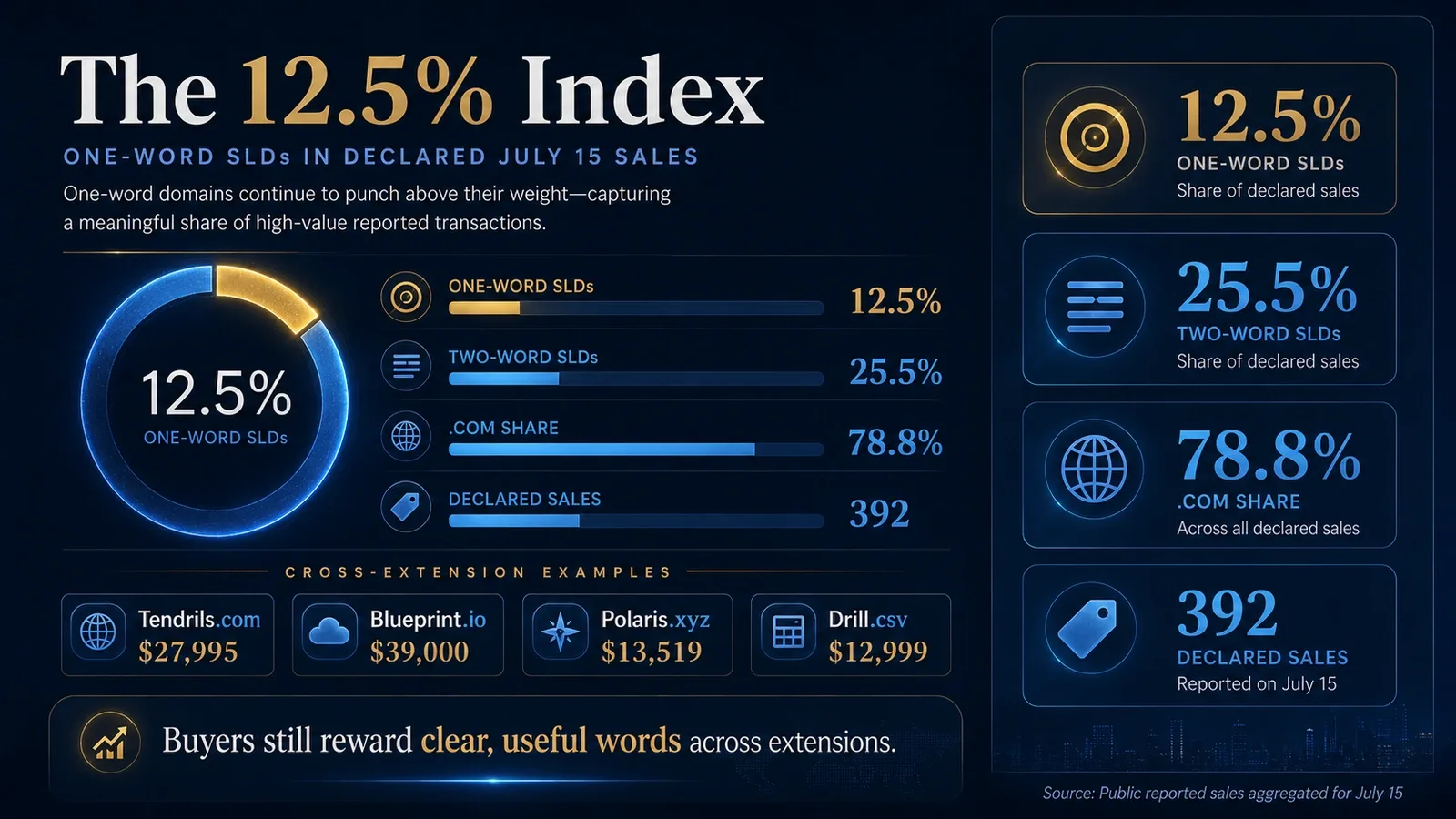
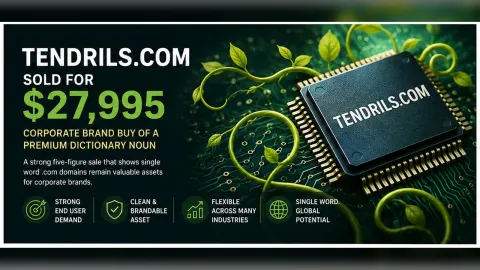
Observed activity within the last few Crunch.id daily reports includes Tendrils.com for $27,995, Blueprint.io for $39,000, Polaris.xyz for $13,519, Buy.gg for $9,999, Grace.si for $5,000, Sirius.xyz for $3,049, Dapple.ai for $5,350, Greeter.ai for $4,715, Elo.in for $6,862, Build.to for $3,649, and Carros.mx for $7,499.
Notice how these names sit across different extensions and price points. That demonstrates variance and proves one-word assets are not only found in high five figure sales on .com. But look closer. Each uses an easy to understand word as its foundational asset.
These names are domain names many investors would brand and build products around. Buyers not only follow extensions, they follow words they can put into service today.
Tech Companies Like Short Words Too
Large corporations and tech companies prefer short dictionary terms because uncertainty hurts productivity. Short words work well on logos, in investor decks, on product dashboards, in email addresses, social media handles, app stores, and future logo adaptations. Long phrases tend to scream digital advertising flypaper or temporary marketing campaign. Clean words do not.
Short branding terms are also easier to sign off on internally compared to longer, awkward names that sound like they were generated by an SEO novice. These short terms create instant trust. They feel like something owned versus a website built for lead generation.
Corporate Interest Can Translate Into Retail Sales
Domain name acquisitions from corporations often include dictionary terms for defensive purposes. The company might want the name for an internal project, future brand, product idea, or as part of a naming system. Sometimes they purchase the domain before launching anything public. The sale might not show up in Crunch.id data for months, years, or not at all if they build privately.
When analyzing completed transaction data though, we often see words that are not yet in use purchased as part of a branding strategy. Perhaps the company did not launch under that brand, but maybe they did. We will never know until they tell us or we see the product.
When companies buy words and do not launch we cannot see it, that still contributes to the value of dictionary domains. The word could sit for years and be strategic. Not every sale is a guarantee of something coming soon.
Keyword Phrases Versus One-Word Brandability
Two word phrases and longer naming options certainly work. In fact, most keywords or niche service phrases sell better on average than standalone words. But these longer domains are far more search dependent. They typically feel less like a company and more like a one purpose asset. We tend to trust these phrases less as technology brands.
This is not always true, but corporations tend to lean towards words they can build platforms around. Words that need explanation are riskier.
Word Counts Tell Us About Investor Interest
Keep in mind word count is simply one measure of interest. Having a clean one-word label is often easier to pronounce, type, remember, and fit in a logo than most forced combinations of words. Clean one-word names simply suffer less friction.
Crunch.id publicly separates one-word SLDs from two-word SLDs each day. Viewing this data over time gives investors valuable information about how many daily market transactions are happening with dictionary terms compared to phrases.
We cannot say a single day proves one trend over another, but reviewing daily sales reports gives visibility into common trends. When domain names with a one word SLD continue to populate sales reports from the highest sale to the lowest we can infer they are retaining a structurally important role.
Importance Of Cross Extension Sales Analysis
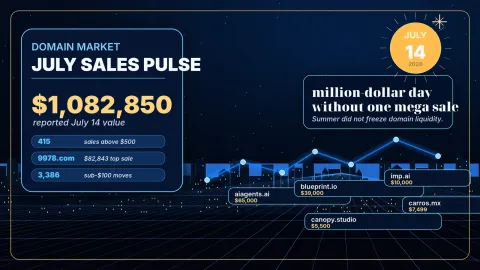
Cross extension data matters greatly these days. The July 12 report featured Polaris.xyz at $13,519, Buy.gg at $9,999, Grace.si at $5,000, and Sirius.xyz at $3,049. The July 14 report had Blueprint.io for $39,000, Tendrils.com for $27,995, Imp.ai at $10,000, Carros.mx at $7,499, Groupe.fr at $5,719, Canopy.studio at $5,500, and Weev.io at $5,995.
Buyers are purchasing useful words on extensions where they have real world utility. Blueprint.io makes sense to developer tool companies. Polaris.xyz works for Web3 startups who think harder about their brand identity. Both names carry meaning because of their word choice and find buyers across extensions away from .com.
Location Branding Specific Country Codes Are Purchasing Terms Too
Grace.si is an example of someone spending money in a ccTLD that has had emerging speculative interest over the past year. Group.ee sold for $5,000 on July 15. Both show buyers are not only paying attention to .com but also finding assets in the right country codes or niche extensions.
Niche and unconventional extension examples also show how buyers experiment outside the most familiar lanes. The broader point is not that every unusual extension deserves investor attention. It is that strong, memorable SLDs can occasionally carry buyer interest even when the extension is more specialized.
DotCom Sales Volume Still Matters
This does not mean .com sales are unimportant. In fact, Crunch.id showed .com represented 78.8 percent of total reported sales on July 15. On July 14 it accounted for 76.6 percent. The day before it sat at 83 percent sales volume. Domain investors already know this. Because of reputation, trust, and liquidity .com leads the aftermarket.
Key point: .com is important because the aftermarket revolves around it. Sales of highly brandable one word .com domains continue to set the baseline for domain sales. When traders ask what is a good price, they are typically referencing .com names with strong words.
Does That Mean Alternative Extensions Are Unimportant?
No. In fact they matter more than ever. Many companies cannot register their perfect .com or that particular .com is priced far out of their budget. Companies also launch now without trying to get the perfect .com first.
A company may own or prefer a trusted .com brand while still considering useful names across .io, .ai, country-code extensions, or other alternatives when the audience, product, and budget make the fit logical.
Point being, cross extension sales analysis has never been more important for informed domain portfolio work. Buyers care about words, but they also care about buying terms on extensions their audiences accept.
Summary Of One Word Presence Across Extensions
The Crunch.id daily sales report showed that on July 15:
· one word .com sales made up 12.5 percent of tracked transactions
· two word .com sales made up 25.5 percent of tracked transactions
Domains with one-word SLDs continue showing up in a large enough percentage of daily sales reports to matter. We see purchases in .com, .io, .ai, .xyz, .gg, country codes, niche extensions like .info and .to, and more.
This signals buyer interest is not going away even as many investors gravitate towards alternative extensions and try acquiring names on extension opportunities they personally would not have considered five years ago.
Can International Words Increase Value Potential?
When it comes to international keywords or words specific to other languages, yes they can be valuable, but usually within the target region or within communities that recognize the word. Elo.in, for example, appeared in the July 15 Crunch.id report at $6,862, showing that short terms can still attract attention outside the dominant .com lane.
Top Tier English Words Transfer Across Borders
Memorable English words that sound proper, are easy to pronounce in many languages, and have positive meanings have stronger potential to transfer across borders than random nonsense words that do not look or sound like legitimate business terms in English.
A domain like Blueprint delivers commercial value even outside the United States because when it comes to technology, marketing, startups, and online commerce many cultures speak English fluently enough to work. Now compare Blueprint to something like:
· Frskd99.com
· Genericbrand123.io
· F00tballtournament.ai
The chances of spotting blurry words like these inside non-English speaking regions is significantly lower.
Short versus Long Tail Domain Keywords
The difference between domain sales driven by descriptive keywords compared to branding type words. Sites like BestPizzaTracker.com clearly explain what someone is offering compared to Zen.ai. Investors should spend less time arguing about which naming type is superior and focus more on balancing a portfolio with diverse names that fit what they are actually trying to build.
Favorable Perception Drives Domain Sales
Why do consumers and users trust single words more than keyword phrases as brand names? If you build a technology company called BestPizzaTracker your audience will assume it is new, small, or struggled to find a better name. An app called Zen comes across as more professional even if both might function perfectly fine.
Domains matter because in internet-based industries they are often the first interface a user will encounter. While a domain does not make or break a business every little detail we can control adds up in building trust online.
Conclusion
One word domains are prevalent enough to keep watching on a consistent basis because the category retains importance in today’s aftermarket. Longer naming formats also sell better on average than single syllable words, but multicomponent names are often harder to brand than simple memorable terms.
Instead of chasing fads, building a diverse dictionary word based portfolio could help investors maintain liquidity when market conditions no longer favor questionable extension combinations or overpriced keywords.
Buyers are paying attention to useful words on useful extensions.