Web3 domains are getting serious. For many people, the last big conversation around Web3 domains centered around speculation, floor price discussions, profile picture placement, and trying to figure out if a random short crypto name could flip for double digits within hours of release. I don’t think that chapter is entirely over, but the larger trend I am seeing in 2026 focuses on utility.
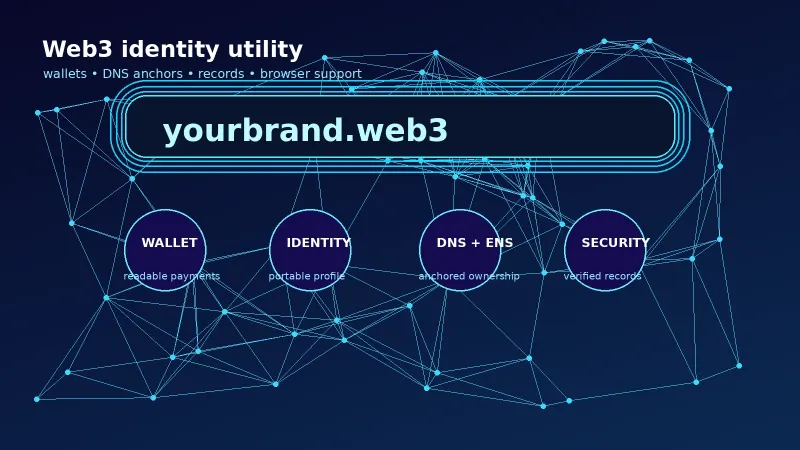
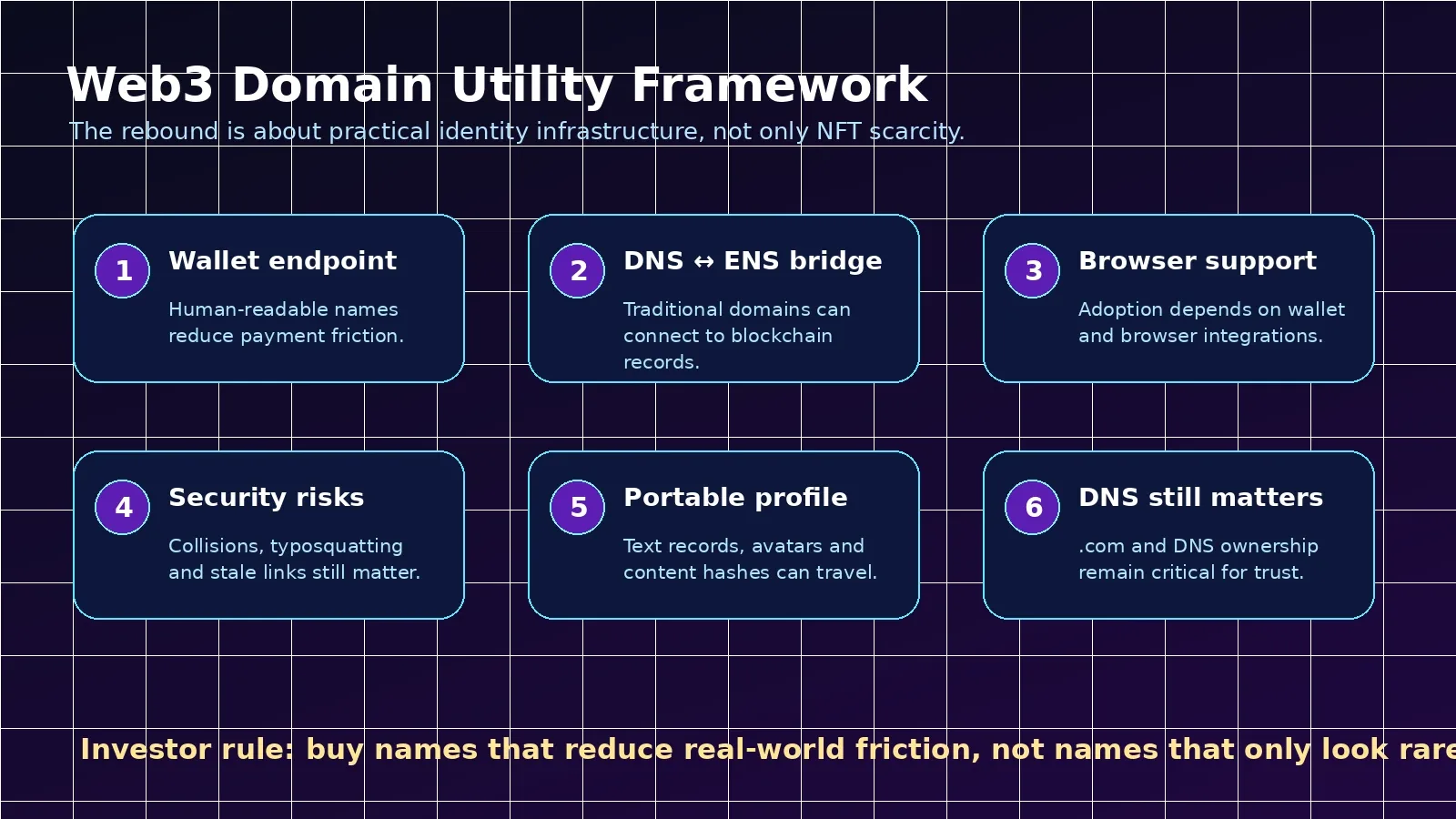
Web3 domains are most useful when they serve a practical purpose. They can function as a readable wallet endpoint, decentralized website pointer, portable identity layer, membership key, or bridge between traditional DNS names and blockchain based records. This is why current Web3 identity trends deserve a less speculative and far more technical analysis.
Ask Yourself If Web3 Identity Could Be Useful To Normal People
For investors specifically, this is not about analyzing names to determine if the hype is coming back. Instead, ask yourself if the underlying infrastructure is reaching a level of usefulness where normal users, brands, crypto wallets, web browsers, and even enterprises could care again.
Buying domains purely because they’re NFTs is silly. Buying domains because they could solve pain points for normal people is smart.
Beyond Short Name Speculation
The first big wave of Web3 domain purchases looked identical to many other early crypto asset markets. Buyers rushed into short names, celebrity names, famous brand terms, emoji names, trendy phrases, and anything else that sounded like it could quickly be flipped for thousands of dollars. Sure enough resale hype was real for a while. Some buyers made money. Most got nothing.
We are past that immature stage. I think the current rebound will be far more intentional about utility. The best opportunities are not going to be short names that simply look rare. Instead, the best names are also going to resolve easily, route traffic, authenticate users, receive payments, and support decentralized identity across multiple applications.
Does your favorite Web3 name reduce friction for a user or a business? If not, it’s probably just a bet.
Utility1: Serve As A Wallet Endpoint
The easiest Web3 utility case is also one of the best ones. Most cryptocurrency wallet addresses are nowhere near user friendly. They are usually long, ugly, and risky to type by hand.
A readable wallet endpoint can solve all of that. Using Unstoppable Domains wording, resolution refers to converting a human readable domain into cryptocurrency addresses. Right now, unstoppable supports addresses for over 310 cryptocurrencies and Blockchains via a single domain name. Ethereum Name Service supports a similar multichain address record feature.
People like to remember words better than hashes. Names that consistently reduce stress or fear around sending cryptocurrency have clear value.
Utility 2: Bridging DNS With ENS Records
Arguably the most interesting development right now is the integration between traditional DNS names and blockchain based systems like Ethereum Name Service (ENS). Enabling DNS name imports in ENS is actually quite simple. DNS names can be imported into ENS by enabling DNSSEC and adding a TXT record that looks like . This TXT record is later verified against Ethereum smart contracts.
I covered some of the downsides of alt DNS previously, but want to focus on the upside of what this means for traditional domain owners. Instead of giving up a .com brand to play with decentralized DNS records, companies can simply bridge existing DNS names with ENS based records. Identity infrastructure just got a whole lot easier for traditional brands.
Investors should notice this trend too. Owning a .com does not automatically conflict with Web3 ownership projects. Portfolio strategies may start leaning towards layered ownership: keep the traditional DNS domain but link useful crypto addresses, content hashes, or identity metadata to the name where possible.
The Importance Of DNS Anchoring
One reason DNS anchoring is powerful is due to name collision risks. Decentralized Web3 naming markets have a serious fragmentation issue. Different blockchains can issue the same name across competing namespaces. Users, wallets, browsers, and brands hate when that happens.
ICANN has said alternative naming systems “require bridges back to the DNS world” and may operate with “assumptions about how those names are resolved which may differ fundamentally from the global DNS.” ICANN’s work around name collisions in 2026 will continue to focus on minimizing risk if the same name is later used in other systems.
Web3 domains anchored to existing DNS names have far clearer ownership records. Name squatting is still possible if someone buys the identical word through an alt namespace, but anchoring reduces risk where possible.
The Browser Problem
Every global browser on the planet already knows how to understand DNS names. Web3 names do not automatically work everywhere.
Documentation from Brave updated earlier in 20 26 tells us Web3 domains like ENS names and Unstoppable Domains “can represent addresses across multiple blockchain networks” and can also receive cryptocurrency payments in different coin types. Brave lists several Web3 TLDs supported by ENS, Unstoppable Domains, and Solana Name Service after users turn on Web3 functionality in settings. Opera has offered support for Unstoppable powered Web3 sites too.
Progress is good, but unstoppable wallet names do not automatically work in the default Safari web browser. Safari will need support. Google will need support. Every new user will need support. This is where investors should recognize the difference between mostly useful and truly universal. Do not mistake relatively low liquidity for meaningful adoption.
Connecting To ICANN
Connecting Web3 names to ICANN is becoming an important topic too. ICANN kicked off their 20 26 new gTLD application window on 30 April 20 26. It will close on 12 August 20 26. As tribalism flares in certain corners of the Web3 world, this matters because some decentralized naming companies may want certain names to officially join the DNS as top level domains.
Unstoppable has said they plan to use a dual approach where some names stay onchain as decentralized identifiers and selected names apply for ICANN participation. That strategy is insightful because it actually recognizes both markets are real.
Decentralized names want portable ownership and flexible identity options. The traditional DNS world wants universal resolution and multilateral agreement.
Let the user type a name into any browser and get a reply. That is the power users expect from universal DNS resolution. Projects that figure out how to offer both may stand out.
Issuing Subdomains As Identitiy Keys
Issuing verified identity subdomains is an underexplored use case. The ability to create branded subs for users, customers, employees, creators, affiliates, or members transforms a normal domain into a digital identity platform.
Would you join a loyalty program that issued .yourbankname.com names to members? Users could still verify ownership of their subdomain via Ethereum blockchain records or through wallet login providers that support_crypto owned decentralized identifiers.
Web3 names that support issuing cryptographic guarantees around subdomains could turn a static namespace into an onchain rentable.
Data Portability: Web3 Domains As Profiles
Identity infrastructure becomes more useful when users can transport some of that data elsewhere. If a domain can store text records, crypto wallet addresses, content hashes, avatars, social media handles, or verified data. The domain can start to act as a portable profile picture.
ENS shows examples of their other records feature which can contain other chain addresses, content hashes to decentralized websites, and simple text records for data like an avatar image, email address, short description, or social media handles. Unstoppable describes how Web3 domains can be used to simplify crypto payments, launch decentralized websites, and manage portable identity.
Logins, wallet names, social profiles, and online payments are all problems related to identity. A good Web3 domain could act as one stable handle that connects many of them.
Domains For Security Reasoning
Blockchain based records can be great for certain aspects of security because the registration itself is difficult to change without an owner’s crypto key. That helps prevent some social engineering attacks against domain registrars specifically.
Users can still make mistakes sending to the wrong address. They can lose their own keys. They can send funds to anyone that tricks them into thinking a lookalike name is legitimate. As researchers continue to examine blockchain naming systems this year, we have already seen one study on typosquatting risks across ENS, Unstoppable Domains, and Cardanos ADAHandles system.
attackers will target. If names are primarily used as wallet addresses, expect to see more registrations intended to lure users into sending funds.
Another recent study examines DNS integration points where a blockchain namespace was verified once by a user but later DNS registration changed. The researchers refer to this as zombie linkages. If you’re connecting legacy DNS names with blockchain naming systems be careful. Don’t assume registration validity is a one time process.
One Blockchain Does Not Fit All
Standards for cross chain DNS integration sound great on paper. They are much harder in practice. Wallets vary. Networks have different record standards. Web browsers resolve names differently too. Fragmentation creates trust assumptions.
These are serious problems that have real tradeoffs. Stop arguing about which system is better and look for solutions that support multiple blockchains. An Ethereum user might love your name because wallet support and browser support exist. A bitcoin user may avoid the name because resolutions shows fireworks orbitcoin.com when they try to visit the same name.
Throwing diamonds at mediocre names is not a useful strategy. Smart investors know live resolution across major browsers and wallets is very different than owning a name that mostly just exists as a non functional NFT.
Reality Check: Are NFT Domains Seeing Secondary Demand?
This is the critical question. NFT domains have been offered for sale on secondary markets for years. Are they finally starting to see organic demand or are we going to witness another self-fulfilling hype cycle?
Some popular names will trade. Short names still attract buyers. Useful names still attract buyers. Financial terms still attract buyers. Well known terms that are easier to explain to crypto newcomers will attract buyers.
Long random words or phrases are less useful. Trend jokes will not sell. Misspell brand names and watch demand dry up. These are all good signs if you ask me. Brandless generic domains with no clear utility or hookup value should not see the same level of demand as useful words.
The real question should be if utility minded owners are better buyers. Short domains that act as readable crypto endpoints could solve pain points for normal users. Useful brand terms may be easier to explain. Purchasing identity based utility names that solve problems for actual people should reward patient investors.
Also Dont Forget About DNS Names Either
Web3 brands should consider keeping their DNS names too. A Web3 brand with matching DNS ownership, social media handles, and readable blockchain names has far stronger identity options than a Web3 brand that only buys .crypto names.
Example: If I were to sell my internet identity tomorrow, I would want the .com, the .eth name, defensive variations, and matching Unstoppable names confirmed in my wallet. I would hate to hand off a brand only to have critical pieces of my online identity controlled by others.
Domain investors should note that traditional DNS markets are not going anywhere. Web3 names might be cool, but the root DNS still has universal browser support and most mainstream users already understand how to navigate to sites using DNS names.
What To Look For In 2026 As A Web3 Domain Investor
Resolution: Does it easily resolve somewhere useful? Wallets? Browsers? Both?
Activity: Are developers actually building things? Is the GitHub repository active? Is documentation being improved? Are integrations being added to wallets and services where owners can clearly demonstrate support?
Long Names Suck: Utility based name ownership should reduce friction. Longassmeaninglessnames.com does not reduce friction.
Short, Practical Names Are Strong: Short names that could work as a crypto endpoint always have value. Surnames are consistently strong due to demand. Transaction and financial terms are useful too. Banks love these words. So do criminals.
Finally: Buy DNS Names When You Can: If you can safely secure a matching DNS name for your favorite Web3 identity project, do it. Your future self will thank you when it comes time to sell or build partnerships.
Conclusion: Web3 Utility Hasnt Gone Away
I do not think we are returning to the irrational speculative attitudes of early Web3 domains. Instead, we are rebuilding Web3 real estate with more focus on how domains can be useful.
Domains can route traffic to decentralized sites. Names can act as onchain wallets. Domains can point to crypto addresses and encrypt data hashes. Domain names attached to DNS names could serve as anchors for decentralized identity.
Names that act as infrastructure could return usefulness to an industry grown stale after years of normalized speculation. Whether thats good or bad depends on your investment style.
I do not think every name is useful, however. Fragmentation, name collisions, typosquatting, browser support issues, and general illiquidity still plague this market. Do not buy Web3 names because they are NFTs. Buy Web3 names that could be useful for normal people on the internet.